Sugar Free Electrolytes in Australia: What to Buy and What the Label Means
Zero and low sugar electrolytes sold in Australia compared on sugar, kilojoules, sodium, sweetener and price per serve, plus what "sugar free" means on a label.
 Lachlan Maskell
7 min read

Quick answer: Sugar free electrolytes give you sodium, potassium and magnesium without the glucose found in most sports drinks. In Australia, LMNT, Sodii Everyday, HYRO Sugar Free, Gatorade No Sugar and Fluence Base 250 list zero sugar, while Dr. Hydrate and Nuun Sport are very low. Sugar helps absorption when you are unwell or racing for hours; for everyday drinking and normal training it is usually unnecessary. Zero sugar is not the same as zero kilojoules.
About this guide: Fluence publishes it and makes one of the products below. Every competitor fact comes from that brand's own website or an Australian retailer's listing, checked in October 2026, and there are no affiliate links.
Sugar free electrolytes compared
| Product | Format | Sugar per serve | Energy per serve | Sodium (mg) | Sweetener | Price per serve (AUD) | Where to buy |
|---|---|---|---|---|---|---|---|
| Dr. Hydrate | Powder jar | 0.3 g ("no added sugar") | 77 kJ | 250 | Sucralose | About $1.67 | drhydrate.com.au, Healthylife |
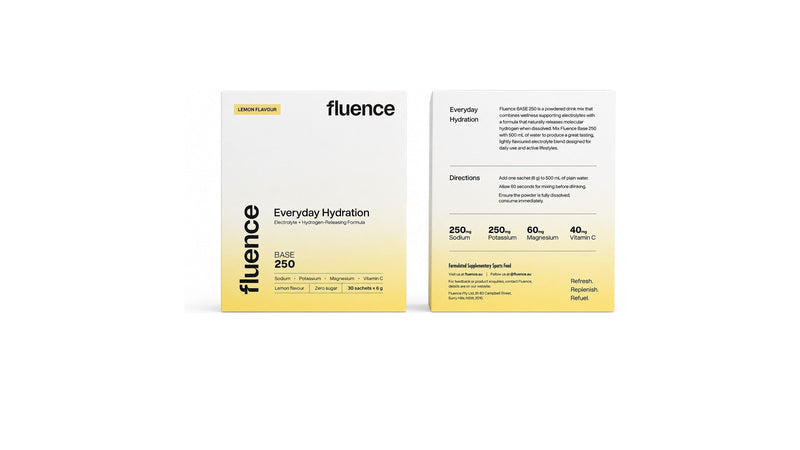
| Fluence Base 250 | Single-serve sachet | 0 g | 17 kJ | 250 | Steviol glycosides (stevia) | About $2.33 | fluence.au, Amazon Australia |
| Gatorade No Sugar | 600 ml ready to drink | 0 g | 30 kJ | 270 | 955 and 950 (sucralose, acesulfame potassium) | About $4.10 a bottle | Supermarkets |
| HYRO Sugar Free | Stick | Sugar free (brand) | Not listed | 500 | Steviol glycosides | About $2.66 | Healthylife, Woolworths Everyday Market |
| LMNT | Stick | 0 g | Not listed for flavours | 1,000 | Stevia (Raw Unflavored has none) | About $2.17 | LYTES |
| Nuun Sport | Effervescent tablet | 1 g (dextrose) | About 63 kJ | 300 | Stevia | About $1.24 to $1.30 | Imported; some sports stores (stock varies) |
| Sodii Everyday Hydration Salts | Tub or sachets | Zero sugar (brand) | Under 3 Cal (under 13 kJ) | 1,000 | Organic stevia (unflavoured has none) | About $2.13 to $2.30 | sodii.com.au, Healthylife |
Figures are per serve as each brand or retailer lists them, checked in October 2026. Prices are regular prices for the most common pack; sales and subscriptions can be lower. Formulations and prices change, so check the current label before you buy.
What does "sugar free" mean on an Australian label?
Less than you might think. The Australia New Zealand Food Standards Code sets exact rules for some sugar claims but not for "sugar free" itself:
- Low sugar: no more than 2.5 g of sugars per 100 ml for a drink, or 5 g per 100 g for a solid.
- No added sugar: no sugars added as an ingredient (including honey, malt, maltodextrin and glucose syrup), and limits on the sugars the food contains naturally.
- Unsweetened: no added sugars and no intense sweeteners such as stevia or sucralose.
- "Sugar free", "no sugar" and "zero sugar" have no set number in the Code. Like any claim, they must not mislead.
Two more rules are worth knowing. For a powder, sugar claims apply to the drink as you make it up, following the directions. And intense sweeteners do not count as sugars, so a sweetened drink can still have 0 g of sugars.
The practical answer: ignore the front of the pack and read the "Sugars" line in the nutrition panel, per serve.
How to read an electrolyte label
- Sugars per serve. Check the per-serve column, not only per 100 ml. Glucose, dextrose, sucrose and fructose in the ingredients all mean sugar.
- Carbohydrate. A powder can show 0 g of sugars and still list maltodextrin, which is a carbohydrate but not counted as a sugar. If you want no carbohydrate at all, check this line too.
- Sodium per serve. Around 250 to 500 mg is an everyday top-up; around 1,000 mg is built for heavy sweat. How much sodium do you need?
- The rest of the minerals. Look for potassium and magnesium alongside sodium, not one big sodium number on its own.
- Serve size and serves per pack. Compare price per serve, and check how much water the serve is meant for.
Do electrolytes need sugar to work?
Not for everyday use. Glucose does help the gut absorb sodium and water faster, which is why oral rehydration solutions for illness contain it, and why endurance athletes take carbohydrate during long races. For an ordinary day or a normal training session, that faster uptake is rarely needed, and the sugar mostly adds kilojoules. If you are unwell and losing fluids, an oral rehydration solution from your pharmacist is the right tool. The full answer: Do electrolytes need sugar?
What sweetens a sugar free electrolyte?
Usually stevia (listed as steviol glycosides or stevia leaf extract) or sucralose, sometimes with acesulfame potassium. In the table, LMNT, Sodii, HYRO, Nuun and Fluence Base 250 use stevia; Dr. Hydrate uses sucralose; Gatorade No Sugar lists additive codes 955 and 950 (sucralose and acesulfame potassium). LMNT and Sodii also sell unflavoured versions with no sweetener. Which you prefer is mostly taste.
Is zero sugar the same as zero calories?
No. A zero-sugar drink can still contain a little energy from flavours, acids and other ingredients. Fluence Base 250 has 0 g of sugars and 17 kJ (4 Cal) a serve. Sodii lists under 3 Cal, Gatorade No Sugar 30 kJ a bottle, and Dr. Hydrate 77 kJ a serve. All are small next to a regular sports drink, but none is zero.
Low sugar or sugar free: which do you need?
For everyday drinking, either works. A tablet with 1 g of sugar dissolved in about 500 ml of water is about 0.2 g per 100 ml, well inside the "low sugar" limit. Choose strictly zero sugar if you count every gram, or if you want an electrolyte while fasting. Choose a drink with sugar on purpose for long races, or when you are unwell and need an oral rehydration solution.
Where Fluence fits
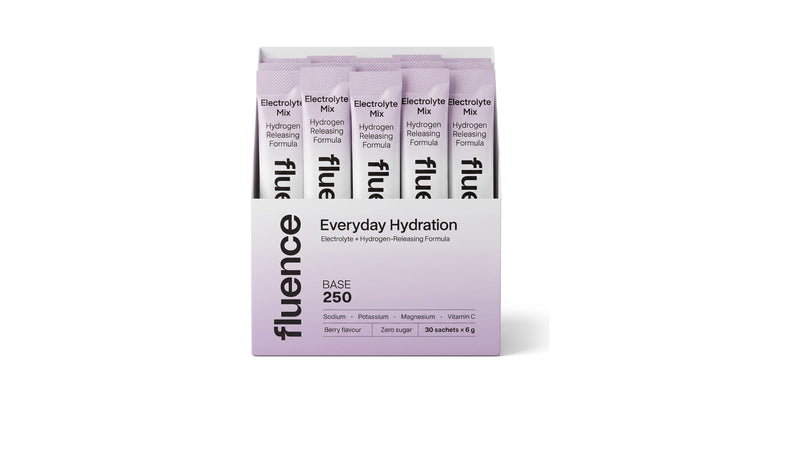
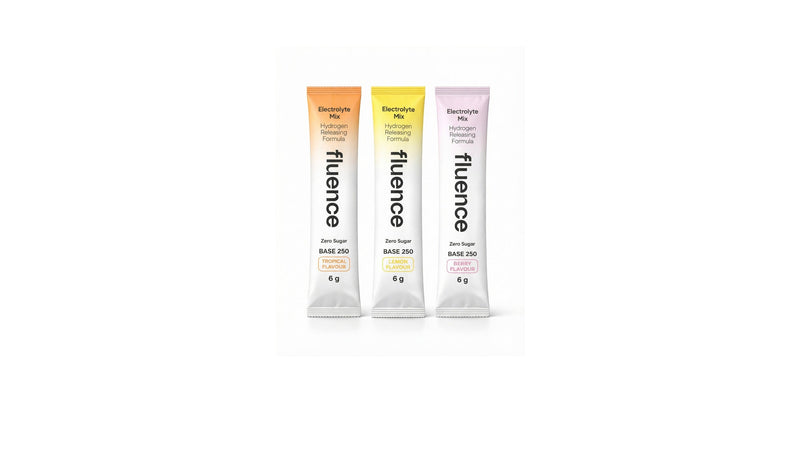
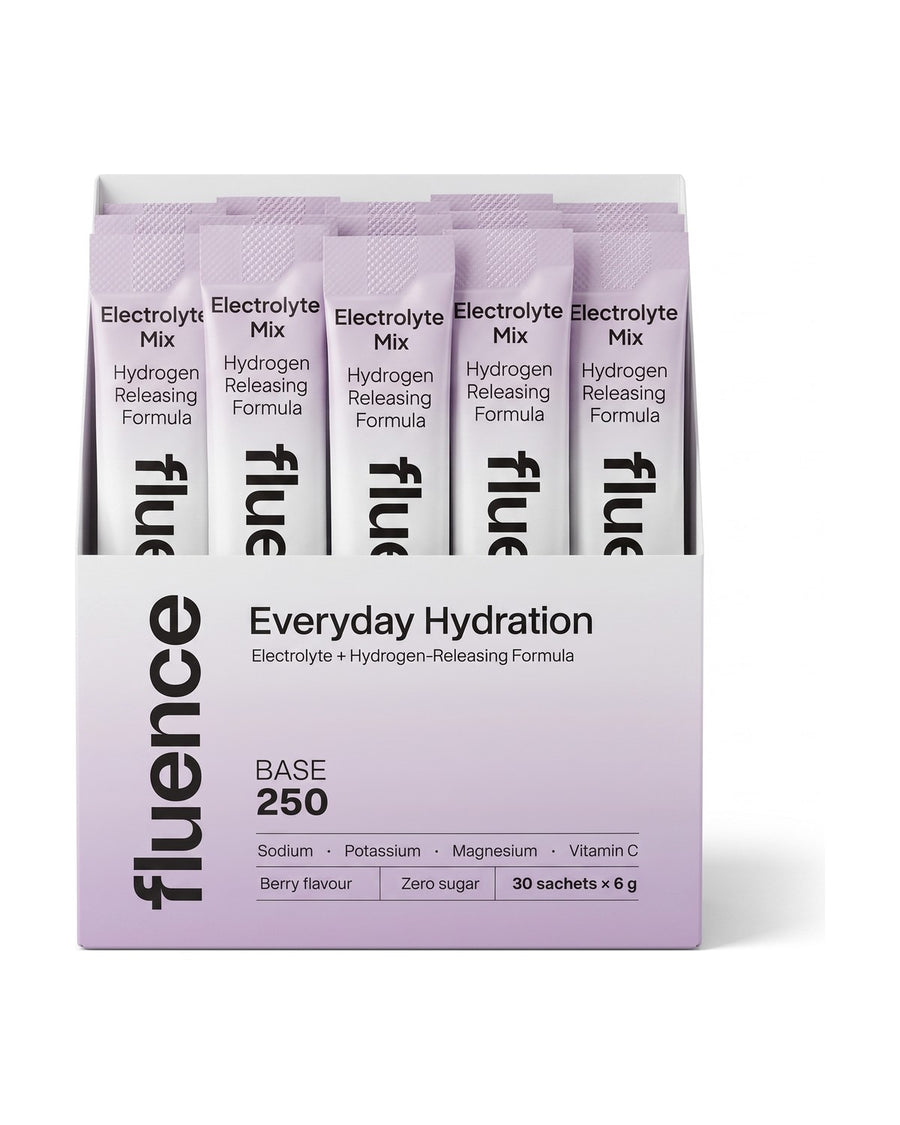
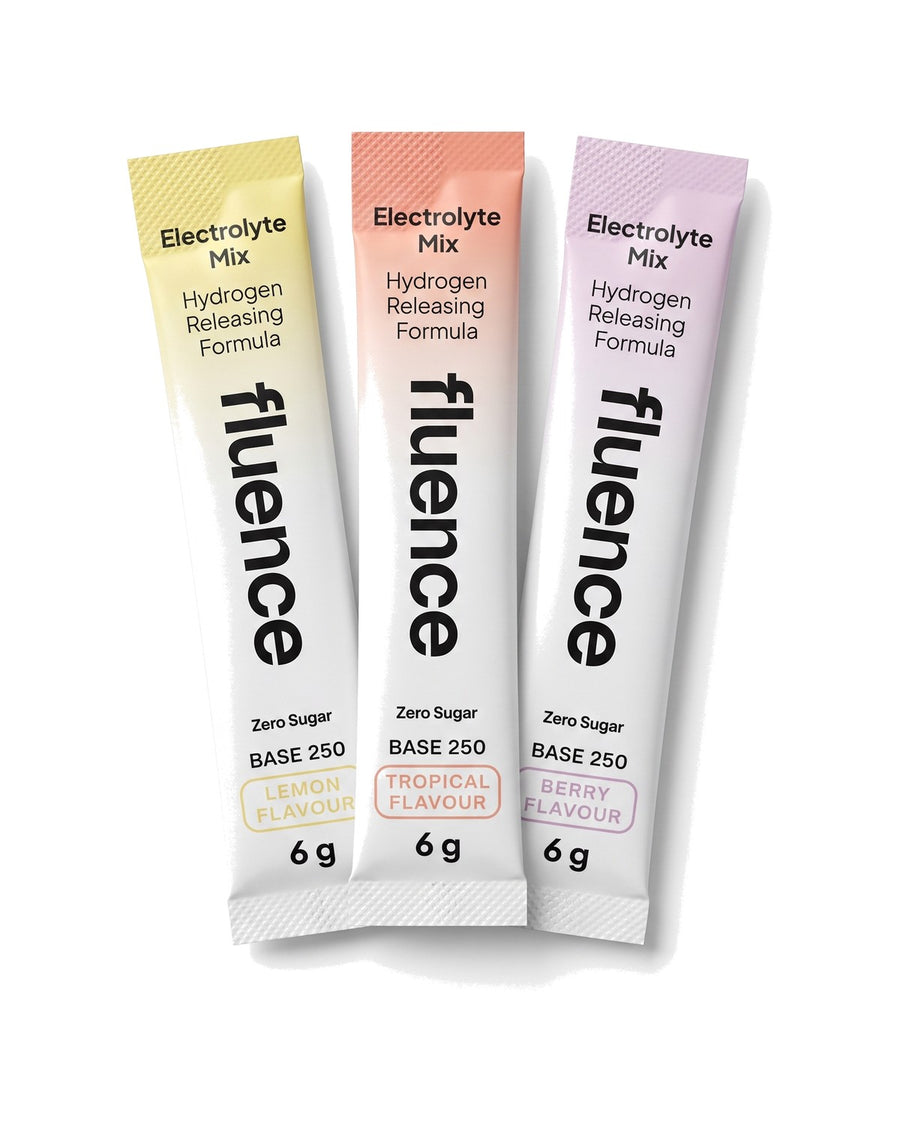
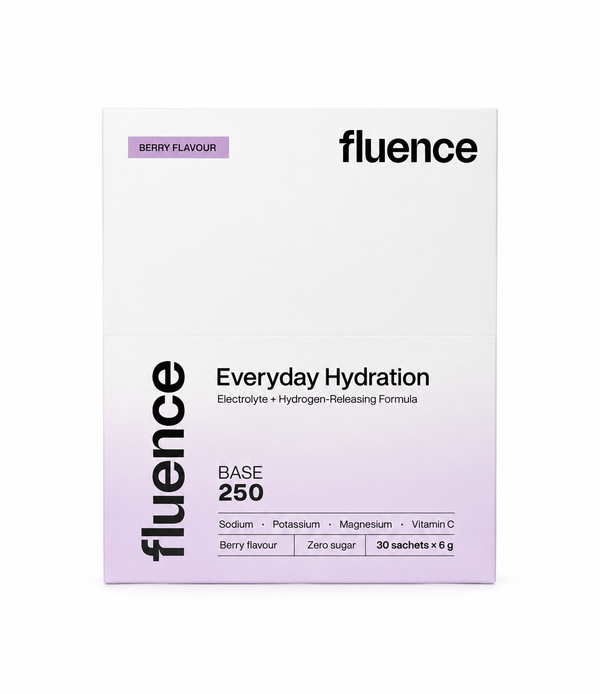
Fluence Base 250 is an Australian-owned, zero-sugar electrolyte powder. Each 6 g sachet has 250 mg sodium, 250 mg potassium and 60 mg magnesium, plus 40 mg vitamin C, and is 17 kJ (4 Cal) a serve. It is sweetened with stevia, non-carbonated, with no artificial colours. Tear open a sachet, pour it into about 500 ml of water, then stir or shake until dissolved. The 500 ml is just a guide: use more or less water to suit your taste. If you sweat heavily or want a 1,000 mg dose, LMNT or Sodii suit those days better. See Base 250.
Base 250 is a formulated supplementary sports food and is not suitable for children under 15 years of age or pregnant women; it should only be used by them under medical or dietetic supervision.
For the wider comparison, including products with sugar, see Best electrolytes in Australia: an honest comparison.
For daily picks, see best electrolytes for everyday use.
FAQ
What are the best sugar free electrolytes in Australia? It depends on how much sodium you want. LMNT and Sodii Everyday carry 1,000 mg for heavy sweat, HYRO Sugar Free 500 mg, and Fluence Base 250 250 mg for everyday use, all with zero sugar. Gatorade No Sugar is a ready-to-drink option with 270 mg. Dr. Hydrate and Nuun Sport are very low in sugar rather than zero.
Are sugar free electrolytes as good as ones with sugar? For everyday drinking and normal training, yes. Sugar speeds up the uptake of sodium and water, which matters for illness and long endurance events, not for an ordinary day. If you are unwell and losing fluids, use an oral rehydration solution from your pharmacist.
What does "sugar free" mean on a label in Australia? The Food Standards Code sets no number for "sugar free" or "zero sugar"; the claim must simply not mislead. "Low sugar" means no more than 2.5 g of sugars per 100 ml for a drink. Check the "Sugars" line per serve to be sure.
Do sugar free electrolytes have calories? Usually a few. Fluence Base 250 is 17 kJ (4 Cal) a serve, Gatorade No Sugar 30 kJ a bottle and Dr. Hydrate 77 kJ a serve. Zero sugar does not mean zero kilojoules.
Do sweeteners count as sugar on an electrolyte label? No. Under the Food Standards Code, sugars are monosaccharides and disaccharides, so stevia and sucralose are not counted. A sweetened electrolyte can show 0 g of sugars. Only an "unsweetened" claim rules sweeteners out.
Sources
- Food Standards Code, Schedule 4 (nutrition, health and related claims): https://www.legislation.gov.au/F2015L00474/2026-04-30/2026-04-30/text/original/pdf
- Food Standards Code, Standard 1.2.7: https://www.legislation.gov.au/F2015L00394/2024-10-29/2024-10-29/text/original/epub/OEBPS/document_1/document_1.html
- FSANZ, Getting your claims right: https://www.foodstandards.gov.au/sites/default/files/2023-11/Getting-Your-Claims-Right-2018%20%281%29.pdf
- Dr. Hydrate: https://drhydrate.com.au/products/raspberry-jar
- Fluence Base 250: https://fluence.au/products/base-250
- Gatorade No Sugar, Woolworths listing: https://www.woolworths.com.au/shop/productdetails/153052/gatorade-sports-drinks-sugar-free-berry-electrolyte-hydration
- HYRO, Healthylife listing: https://www.healthylife.com.au/products/hyro-electrolyte-sachets-tropical-hasta-15-x-4g
- LMNT at LYTES: https://lytes.com.au/products/lmnt-recharge-citrus-salt-electrolyte-mix
- Nuun Sport: https://nuunlife.com/products/nuun-sport
- Sodii Everyday Hydration Salts: https://sodii.com.au/products/sugar-free-hydration-salts-tubs
This article is general information only and is not medical advice. If you have diabetes or another medical condition, speak with your doctor about what suits you.

Co-founder of Fluence. Writes about nasal breathing, hydration and the training that shaped both products.
This article is general information only and is not medical or dietary advice. If you have ongoing health or hydration concerns, are pregnant, or take prescribed medication, speak with your doctor, pharmacist or an accredited dietitian.
Base 250 is a formulated supplementary sports food. It is not suitable for children under 15 years of age or pregnant women, and should only be used under medical or dietetic supervision by those groups. It is not a sole source of nutrition and should be consumed in conjunction with a nutritious diet and appropriate physical training or exercise program.
Published 24/10/2026 · Updated 02/11/2026
← Back to Learn