Best Electrolytes for Women in Australia: An Honest Guide
What women actually need from an electrolyte: Australian intake targets for women and men, sweat differences, what "for women" products add, and pregnancy advice.
 Lachlan Maskell
8 min read

Quick answer: Women need the same electrolytes as men: sodium, potassium and magnesium. Australia's sodium targets are the same for women and men, while potassium and magnesium intakes are set lower for women, in line with smaller average body size. A "for women" label tells you little: the electrolyte products marketed to women in Australia range from about 4 mg to 500 mg of sodium a serve. Choose on sodium, sugar and price for how much you sweat, and if you are pregnant or breastfeeding, ask your GP or midwife first.
About this guide: Fluence publishes it and makes one of the products below. Every competitor fact comes from that brand's own website or an Australian retailer's listing, checked in October 2026, and there are no affiliate links.
Do women need different electrolytes from men?
Not different electrolytes, and mostly not different amounts of sodium. Australia's Nutrient Reference Values set these daily intakes for adults:
| Nutrient (per day) | Women 19+ | Men 19+ | Pregnancy | Breastfeeding |
|---|---|---|---|---|
| Sodium, Adequate Intake | 460 to 920 mg | 460 to 920 mg | 460 to 920 mg | 460 to 920 mg |
| Sodium, Suggested Dietary Target | 2,000 mg | 2,000 mg | Not set separately | Not set separately |
| Potassium, Adequate Intake | 2,800 mg | 3,800 mg | 2,800 mg | 3,200 mg |
| Magnesium, Recommended Dietary Intake | 310 to 320 mg | 400 to 420 mg | 350 to 360 mg (19 to 50) | 310 to 320 mg (19 to 50) |
| Fluids from drinks, Adequate Intake | 2.1 L | 2.6 L | 2.3 L | 2.6 L |
The pattern follows body size: sodium is the same, while potassium, magnesium and fluid are set lower for women because the reference values are based on smaller average body weights. Adults who are very active may need more fluid than these amounts.
One limit worth knowing if you combine products: the upper level for magnesium from supplements is 350 mg a day for adults, women and men alike.
Do women sweat less than men?
On average, yes, but mostly because of body size. A 2023 review from the Gatorade Sports Science Institute puts average sweat rates at about 0.8 litres an hour for women and 1.2 litres for men during exercise, and says the difference can usually be put down to higher body mass and harder absolute workloads in men. Sweat sodium is almost the same once exercise intensity and sweat rate are accounted for. The difference between one person and another is far larger than the difference between women and men, so how much you sweat matters more than your sex.
More on this: How much sodium do you actually need?
Does the menstrual cycle change your electrolyte needs?
The research does not show a consistent effect. A 2020 systematic review found core temperature runs slightly higher in the second half of the cycle but found no significant difference in sweat rate, and a 2022 review of fluid balance in female athletes found hormone changes do not appear to affect fluid retention. The evidence base is small and mostly reports averages, so individual experience can differ, but there is no good evidence for cycle-specific electrolyte products.
What do "electrolytes for women" products add?
Mostly extras, not more electrolytes. The products marketed to women in Australia differ far more from each other than women's needs differ from men's:
| Product | Marketed for | Sodium (mg) | Potassium (mg) | Magnesium (mg) | Sugar | Added extras | Price per serve (AUD) |
|---|---|---|---|---|---|---|---|
| Franjo's Kitchen Motherhood Hydration Powder | Pregnancy and breastfeeding | About 5 | Not stated | Not stated | Under 1 g | Coconut water powder, prebiotic, fruit powders, ginger | About $0.90 to $1.12 |
| Hydramama | Pregnancy and breastfeeding | Not listed in text | Not listed in text | Not listed in text | Sugar free | Vitamin C, vitamin B6, folate | About $1.33 |
| JSHealth Hydrate+ | Women's everyday hydration | 500 | 140 | 75 | None listed | Probiotic, inulin | About $2.33 |
| Mineralyte Women+ drops | Women, including menopause | About 4 | About 4 | 108 | 0 g | Trace minerals including boron | About $0.80 |
Figures are per serve as each brand or retailer lists them, checked in October 2026. We list what each product contains; we make no comment on the extra ingredients.
Two products are close to plain magnesium or plain coconut water with almost no sodium, one is a 500 mg sodium powder, and one does not list its electrolyte amounts in text at all. The label on the front tells you little; the nutrition panel tells you what you are getting.
Everyday electrolytes compared
If you train, work in the heat or sweat a lot, these are the general electrolytes most often compared, with no gender marketing:
| Product | Sodium (mg) | Potassium (mg) | Sugar per serve | Price per serve (AUD) | Best for |
|---|---|---|---|---|---|
| Dr. Hydrate | 250 | 160 | 0.3 g | About $1.67 | An all-in-one daily drink with added extras |
| Fluence Base 250 | 250 | 250 | 0 g | About $2.33 | A moderate everyday dose with potassium matched to sodium |
| HYRO Sugar Free | 500 | 250 | Sugar free (brand) | About $2.66 | A middle dose for regular training |
| LMNT | 1,000 | 200 | 0 g | About $2.17 | Heavy sweat, fasting and low-carb eating |
| Sodii Everyday Hydration Salts | 1,000 | 210 | Zero sugar (brand) | About $2.13 to $2.30 | Hot days and heavy sweat |
The full comparison, with sources: Best electrolytes for everyday use in Australia.
Electrolytes during pregnancy and breastfeeding
Fluid needs go up, and the advice on supplements is to check first. Australia's reference values put fluids from drinks at about 2.3 litres a day in pregnancy and 2.6 litres while breastfeeding. Raising Children Network lists sports drinks among the drinks to avoid while breastfeeding and suggests talking to your GP, a dietitian or another health professional before taking supplements. Speak with your doctor or midwife before using any electrolyte or sports supplement in pregnancy or while breastfeeding. Fluence Base 250 is not suitable for pregnant women.
Iron is not an electrolyte
Iron matters more for many women, but it is a separate nutrient. Women aged 19 to 50 need about 18 mg of iron a day, compared with 8 mg for men, according to Better Health Channel and Healthdirect. Electrolyte drinks are not a source of iron, and Fluence Base 250 contains none. If you are concerned about iron, talk to your GP.
How to choose an electrolyte as a woman
- Start with how much you sweat, not the label. Around 250 to 500 mg of sodium a serve suits most training days; around 1,000 mg suits long, hot, heavy sweat.
- Check the sugars line. 0 g or close to it for daily drinking.
- Read the panel, not the front. "For women" products range from almost no sodium to 500 mg.
- Decide on extras on purpose. Probiotics, vitamins and trace minerals are separate choices from electrolytes.
- Pregnant or breastfeeding? Ask your GP or midwife first.
Where Fluence fits
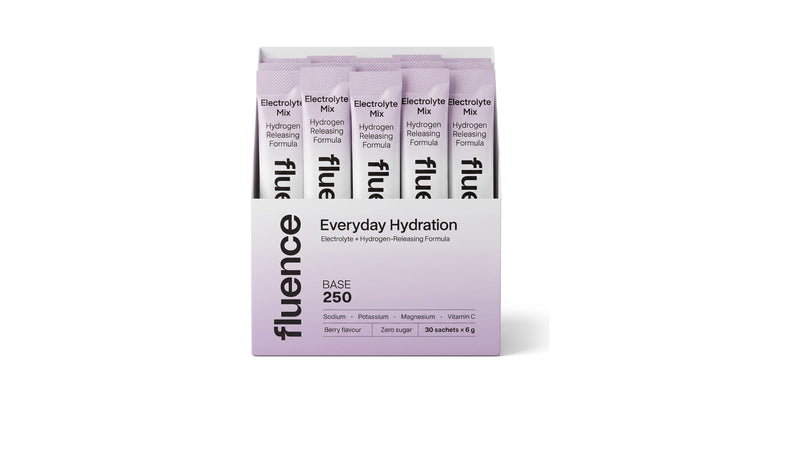
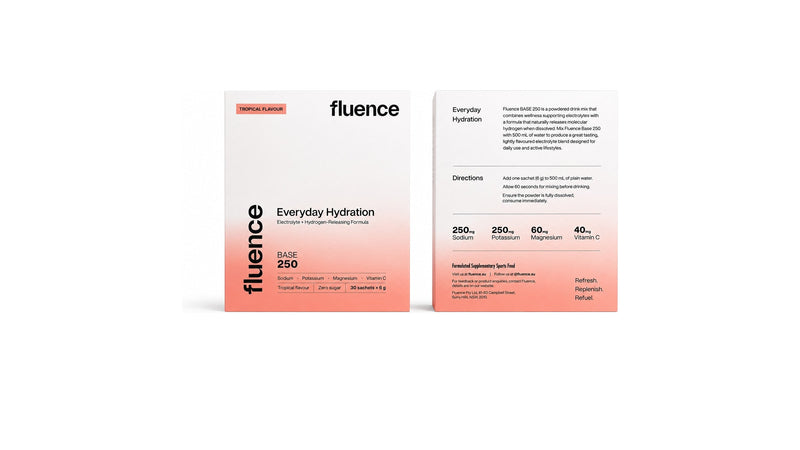
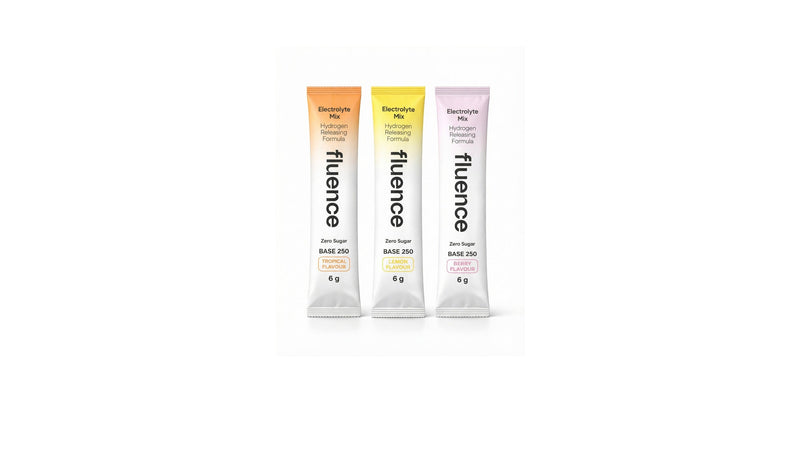
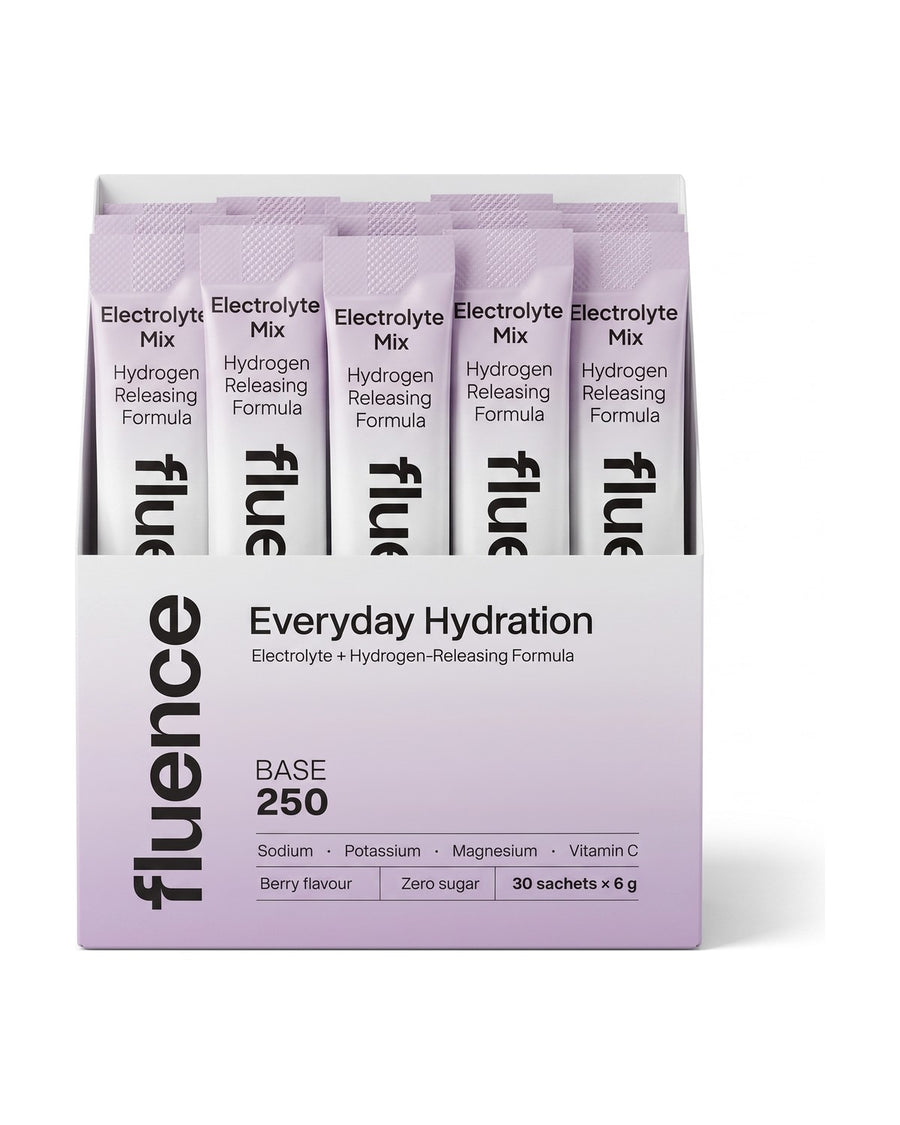
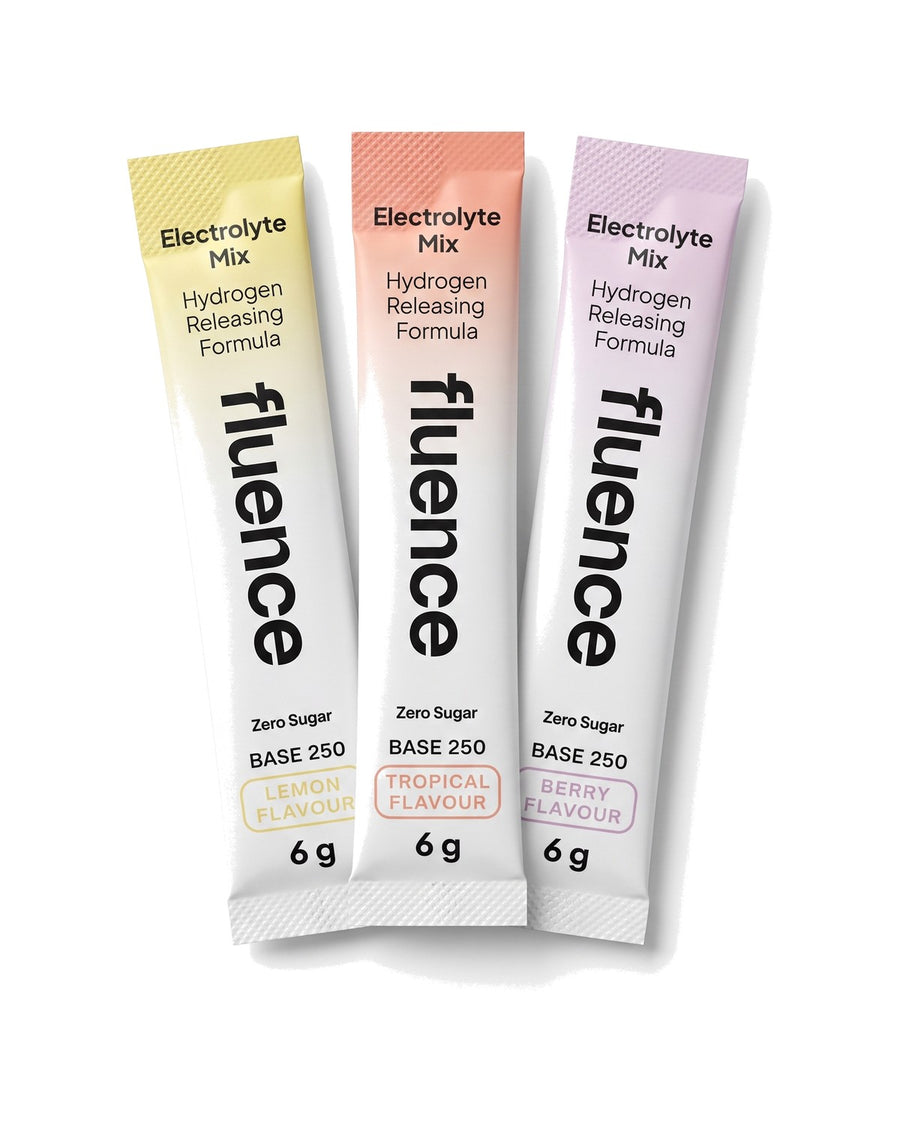
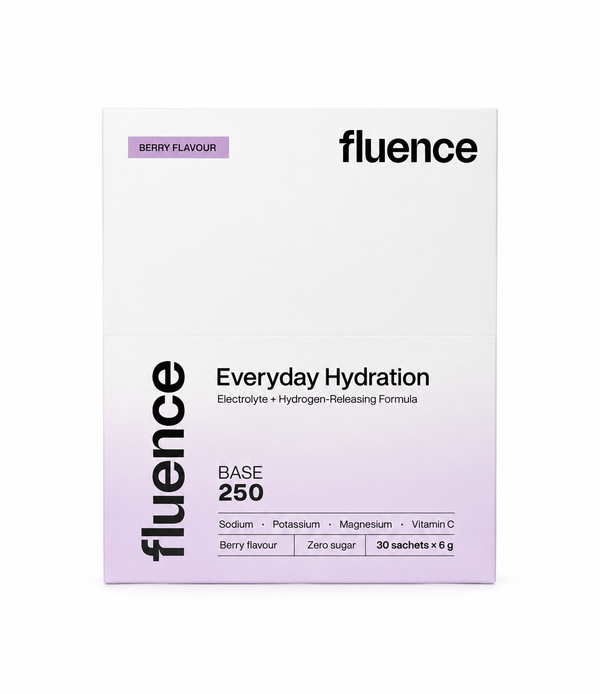
Fluence Base 250 is an Australian-owned, zero-sugar electrolyte powder. Each 6 g sachet has 250 mg sodium, 250 mg potassium and 60 mg magnesium, plus 40 mg vitamin C, and is 17 kJ (4 Cal) a serve. It is not made or marketed for women in particular; it suits anyone who wants a moderate everyday dose with potassium matched to sodium. Tear open a sachet, pour it into about 500 ml of water, then stir or shake until dissolved. The 500 ml is just a guide: use more or less water to suit your taste. See Base 250.
Base 250 is a formulated supplementary sports food and is not suitable for children under 15 years of age or pregnant women; it should only be used by them under medical or dietetic supervision.
For the wider comparison, see Best electrolytes in Australia: an honest comparison.
FAQ
What is the best electrolyte for women in Australia? The same as for anyone: one matched to how much you sweat, with little or no sugar. For most training days that means about 250 to 500 mg of sodium a serve; for long, hot sessions, around 1,000 mg. Products marketed to women range from about 4 mg to 500 mg of sodium, so read the panel.
Do women need more electrolytes than men? No. Australia's sodium targets are the same for women and men, and potassium, magnesium and fluid intakes are set lower for women because of smaller average body size. Women sweat less on average, mostly for the same reason.
Are electrolytes safe during pregnancy? Talk to your doctor or midwife before using any electrolyte or sports supplement in pregnancy or while breastfeeding. Fluence Base 250, like many sports supplements, is not suitable for pregnant women.
Do women's electrolytes work better? There is no evidence that electrolytes marketed to women work differently. They usually differ by what is added, such as probiotics, vitamins or trace minerals, and their sodium content varies widely.
How much sodium should a woman have in a day? Australia's Adequate Intake for adult women is 460 to 920 mg a day, with a Suggested Dietary Target of no more than 2,000 mg, the same as for men. Most Australians already eat more than that from food.
Sources
- NHMRC Nutrient Reference Values, sodium: https://www.eatforhealth.gov.au/node/108
- NHMRC Nutrient Reference Values, potassium: https://eatforhealth.gov.au/sites/default/files/2022-04/n35-potassium_0.pdf
- NHMRC Nutrient Reference Values, magnesium: https://www.eatforhealth.gov.au/sites/default/files/2022-04/n35-magnesium_0.pdf
- NHMRC Nutrient Reference Values, water: https://www.eatforhealth.gov.au/sites/default/files/2022-04/n35-water_0.pdf
- Baker LB. Hydration in physically active women. Gatorade Sports Science Institute, Sports Science Exchange 237, 2023: https://gssiweb.org/sports-science-exchange/article/hydration-in-physically-active-women
- Giersch GEW et al. Menstrual cycle and thermoregulation during exercise in the heat: a systematic review and meta-analysis. Journal of Science and Medicine in Sport, 2020. https://doi.org/10.1016/j.jsams.2020.05.014
- Rodriguez-Giustiniani P et al. Fluid and electrolyte balance considerations for female athletes. European Journal of Sport Science, 2022. https://doi.org/10.1080/17461391.2021.1939428
- Raising Children Network, Breastfeeding diet: https://raisingchildren.net.au/grown-ups/looking-after-yourself/new-mums/breastfeeding-diet-lifestyle
- Better Health Channel, Iron: https://www.betterhealth.vic.gov.au/health/conditionsandtreatments/iron
- Healthdirect, How to meet your iron needs: https://www.healthdirect.gov.au/how-to-meet-your-iron-needs-infographic
- Franjo's Kitchen Motherhood Hydration Powder, Chemist Warehouse listing: https://www.chemistwarehouse.com.au/buy/160307/franjos-kitchen-motherhood-hydration-powder-blood-orange
- Hydramama: https://krumbledfoods.com/products/hydramama-grape
- JSHealth Hydrate+: https://jshealthvitamins.com/products/hydrate-powder
- Mineralyte Women+: https://mineralyte.com.au/product/women-rapid-hydration-drops/
- Fluence Base 250: https://fluence.au/products/base-250
This article is general information only and is not medical advice. If you are pregnant, breastfeeding, have a medical condition or take medication, talk to your doctor or midwife before using electrolyte or sports supplements.

Co-founder of Fluence. Writes about nasal breathing, hydration and the training that shaped both products.
This article is general information only and is not medical or dietary advice. If you have ongoing health or hydration concerns, are pregnant, or take prescribed medication, speak with your doctor, pharmacist or an accredited dietitian.
Base 250 is a formulated supplementary sports food. It is not suitable for children under 15 years of age or pregnant women, and should only be used under medical or dietetic supervision by those groups. It is not a sole source of nutrition and should be consumed in conjunction with a nutritious diet and appropriate physical training or exercise program.
Published 09/11/2026 · Updated 09/11/2026
← Back to Learn