Do electrolytes need sugar to work?
 Lachlan Maskell
6 min read
Lachlan Maskell
6 min read

On this page
It is a fair question, and the two loudest answers are both a little dishonest. Sugar-free brands imply sugar in an electrolyte drink is pure marketing filler. Sugar-carrying brands imply you cannot absorb anything properly without it. The honest answer sits in between, and which end of it applies to you depends entirely on what you are drinking the electrolytes for.
Full disclosure before we start: Fluence makes a zero-sugar electrolyte, so we have a horse in this race. What follows is the version with the trade-offs left in, including the situation where a sugary drink genuinely beats ours.
The part the sugar-free camp gets wrong
There is real science behind sugar in a rehydration drink, and it is worth understanding rather than dismissing.
Your gut has a transport system, SGLT1, that pulls sodium and glucose across the intestinal wall together, and water follows them. Because glucose and sodium are absorbed as a pair, adding a measured amount of glucose speeds up how fast your body takes up sodium and water. Research on this co-transport effect is the entire reason the World Health Organization oral rehydration solution carries sugar, and it is why illness-focused products such as Hydralyte are built the same way. So the flat claim that "sugar-free absorbs exactly the same" overreaches. For getting fluid and sodium into a depleted body as fast as physically possible, a correctly balanced sugar does help.
That is worth conceding cleanly, because it is true. Then comes the question that actually matters for most people.
The part the sugar camp gets wrong
That absorption advantage is built for a specific job: clinical rehydration. Recovering from gastro, a fever, or genuine fluid-deficit dehydration, where speed of uptake is the whole point. That is medical territory, and registered oral rehydration products live there for good reason.
A normal day is not that job. Nor, for most people, is a standard gym session or an ordinary run in mild weather. When you are drinking to stay topped up rather than to reverse a deficit, you are not absorption-limited in the way a sick or severely dehydrated person is. The co-transport turbo has very little to do because there is no emergency to rush. What the sugar does instead is add calories you did not need, dull the taste over a day of drinking, and give some people a heavier drink on the stomach. For a lot of the sugary sports category the sugar is also just there because it sells, at doses closer to a soft drink than to a rehydration formula.
So the sugar is not doing nothing. It is doing something you mostly do not need on a normal day, at a cost you pay every time you drink it.
So, do electrolytes need sugar?
To deliver the minerals themselves, no. Sodium, potassium and magnesium are absorbed perfectly well without any sugar at all.
To move water and sodium as fast as the body can manage during real dehydration, sugar helps, which is why the products made for that job include it.
For everyday hydration and standard training at normal drinking rates, which is what most people are actually buying electrolytes for, sugar is optional at best and a downside at worst. Match the drink to the job, the same way you would match the sodium dose to the job rather than reaching for the biggest number. We go into that side of it in how much sodium you actually need.
A word on "absorbs three times faster"
You will see absorption-speed claims on sugary hydration products, the best known being a line about hydrating several times faster than water alone. The transport science underneath it is genuine. The leap is treating faster uptake in a rehydration setting as if it were a benefit you draw on every time you drink. For a healthy person sipping through the day, hydration is not chiefly limited by how fast your gut can move water, so a faster-uptake number is answering a question you were not really asking. If a product leads with a speed multiplier, it is worth asking speed compared to what, and measured in whom.
Where Base 250 fits
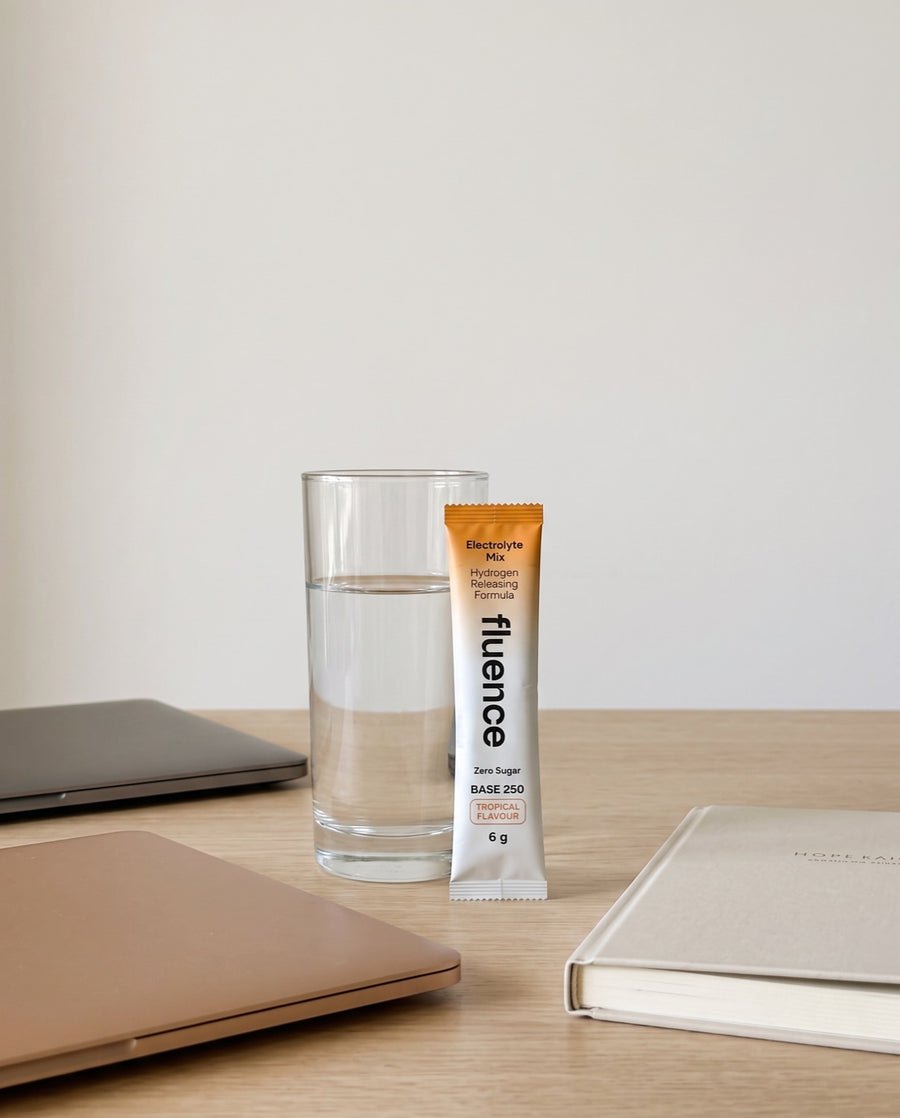
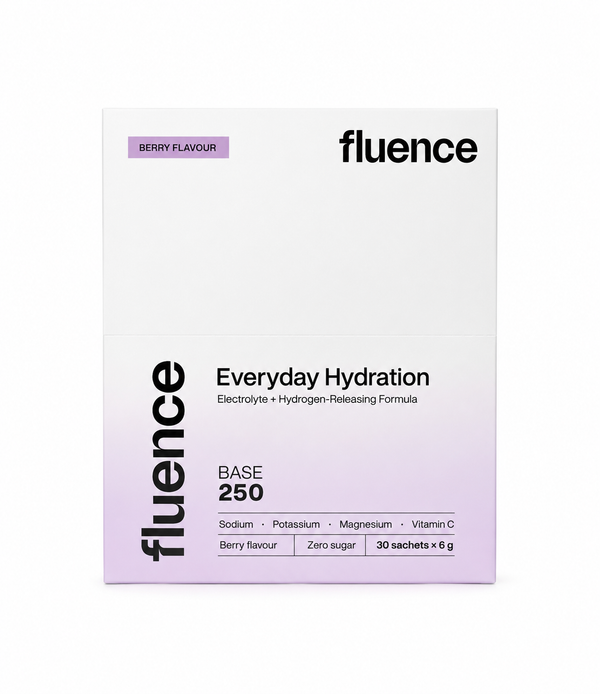
We built Base 250 for the everyday job, so it is zero sugar by design. Per 6g sachet it carries 250mg of sodium, 250mg of potassium, 60mg of magnesium and 40mg of vitamin C, and it releases molecular hydrogen as the magnesium reacts with the water in your glass. It is dosed as a sensible daily and standard-training top-up rather than a race-day or illness formula, and it leaves out the sugar because, for that job, the sugar is a cost without a payoff you would notice.
If your job is the other one, clinical rehydration during illness, reach for a registered oral rehydration product built for it. That is not us, and we would rather tell you than sell you the wrong thing. For a label-by-label look at what "zero sugar" should actually mean when you are comparing products, see our guide to reading a zero-sugar electrolyte label.
If you do try Base 250 and it is not for you, tell us within 30 days of delivery and we will refund the full product price, change of mind included, even if you have opened it.
Frequently asked questions
Do electrolytes need sugar to work?
Not to deliver the minerals. Sodium, potassium and magnesium absorb fine without any sugar. Sugar earns its place in one specific job, clinical rehydration, where glucose helps the body take up sodium and water faster. For everyday hydration and normal training, sugar is not necessary and mostly adds calories and taste fatigue.
Are sugar-free electrolytes as effective as ones with sugar?
For everyday and standard training use at normal drinking rates, yes. The sugar advantage shows up when you are reversing real dehydration, such as illness, which is what oral rehydration solutions are built for. If you are drinking to stay topped up rather than to recover from a deficit, a zero-sugar drink does the job without the extra calories.
When is sugar in a rehydration drink actually better?
When you are genuinely dehydrated, recovering from gastro or a fever, or in a medical rehydration situation. In those cases the glucose-sodium co-transport effect helps your body take up fluid faster, which is why registered oral rehydration products carry sugar. That is a medical use, not an everyday one.
Is zero sugar the same as zero calories?
No. Zero sugar means no sugar per serve, which is what to look for in a daily drink. It does not automatically mean zero energy. Base 250 is zero sugar and a serve carries only a negligible amount of energy, about 17 kilojoules (4 calories), from the trace ingredients, not from added sugar.
Keep reading
- Zero-sugar electrolytes: how to read the label
- How much sodium do you actually need?
- Why we chose 250mg
- Best electrolytes in Australia, compared honestly
Brands are named factually for comparison and may change their formulas, so check current labelling. This article is general information only and is not medical or dietary advice.

Co-founder of Fluence. Writes about nasal breathing, hydration and the training that shaped both products.
This article is general information only and is not medical or dietary advice. If you have ongoing health or hydration concerns, are pregnant, or take prescribed medication, speak with your doctor, pharmacist or an accredited dietitian.
Base 250 is a formulated supplementary sports food. It is not suitable for children under 15 years of age or pregnant women, and should only be used under medical or dietetic supervision by those groups. It is not a sole source of nutrition and should be consumed in conjunction with a nutritious diet and appropriate physical training or exercise program.
Published 03/10/2026 · Updated 03/10/2026
← Back to Learn