Nasal strips for sleep: can they help you breathe better at night?
 Lachlan Maskell
5 min read
Lachlan Maskell
5 min read

On this page
Sleep is when your body recovers.
Training adaptations happen. Muscles repair. Energy restores.
But if your breathing feels restricted at night, sleep can feel less comfortable than it should.
That’s why many people use nasal strips before bed.
Here’s how they work and whether they might suit your routine.
Why Breathing Changes at Night
When you lie down, several things shift:
- Muscle tone relaxes
- Nasal passages may feel narrower
- Mouth breathing becomes more common
- Airflow can feel more restricted
If nasal breathing becomes difficult, many people switch to mouth breathing unconsciously.
For some, this contributes to:
- Dry mouth in the morning
- Disrupted comfort overnight
- Snoring caused by airflow turbulence
Supporting nasal airflow can make breathing feel smoother while you sleep.
How Nasal Strips Work for Sleep
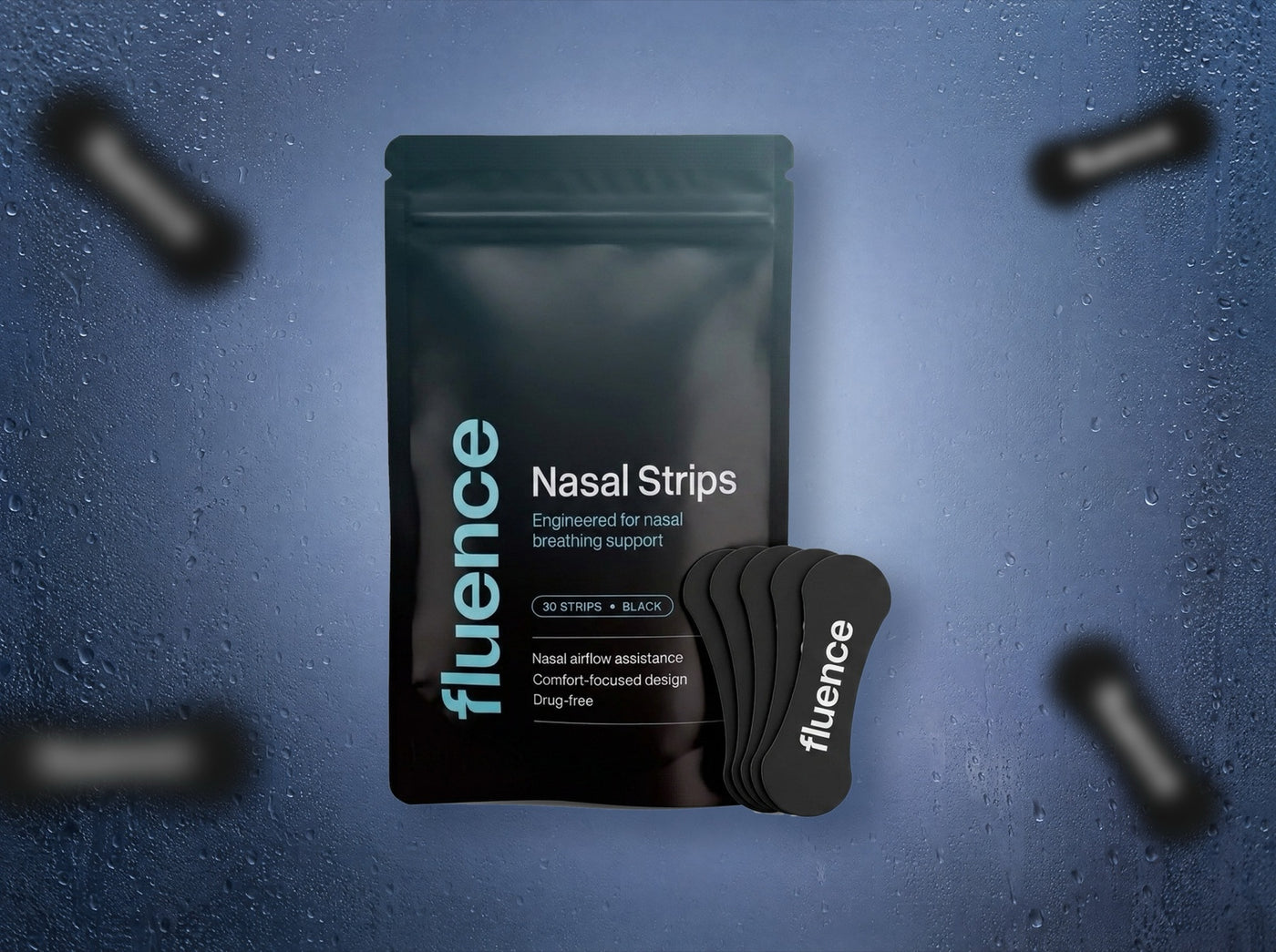
Nasal strips are external breathing supports placed across the bridge of the nose.
They gently lift the sides of the nasal passages outward, helping reduce airflow resistance.
They are:
- Drug-free
- Non-invasive
- External
- Free from sprays or active ingredients
There’s no medication involved. Just mechanical support for airflow.
Because they work immediately upon application, many people notice the difference as soon as they lie down.
Do Nasal Strips Help With Snoring?
Snoring often occurs when airflow becomes turbulent as it moves through partially restricted airways.
If nasal airflow is restricted, mouth breathing may increase. For some individuals, improving nasal airflow can help reduce nasal-related snoring.
Nasal strips are not a treatment for medical sleep conditions. However, they may support clearer nasal breathing, which can help in cases where nasal restriction contributes to snoring.
If snoring is severe or persistent, it’s important to consult a medical professional.
Why Athletes Use Nasal Strips at Night
Recovery is performance.
Many athletes focus on:
- Nutrition
- Hydration
- Sleep quality
- Breath control
Supporting nasal breathing during sleep can feel like a natural extension of training habits built during the day. It is the same reason some people reach for a strip on race day: if you have read our guide to nasal strips for HYROX, the overnight logic is the same, just applied to recovery instead of the start line.
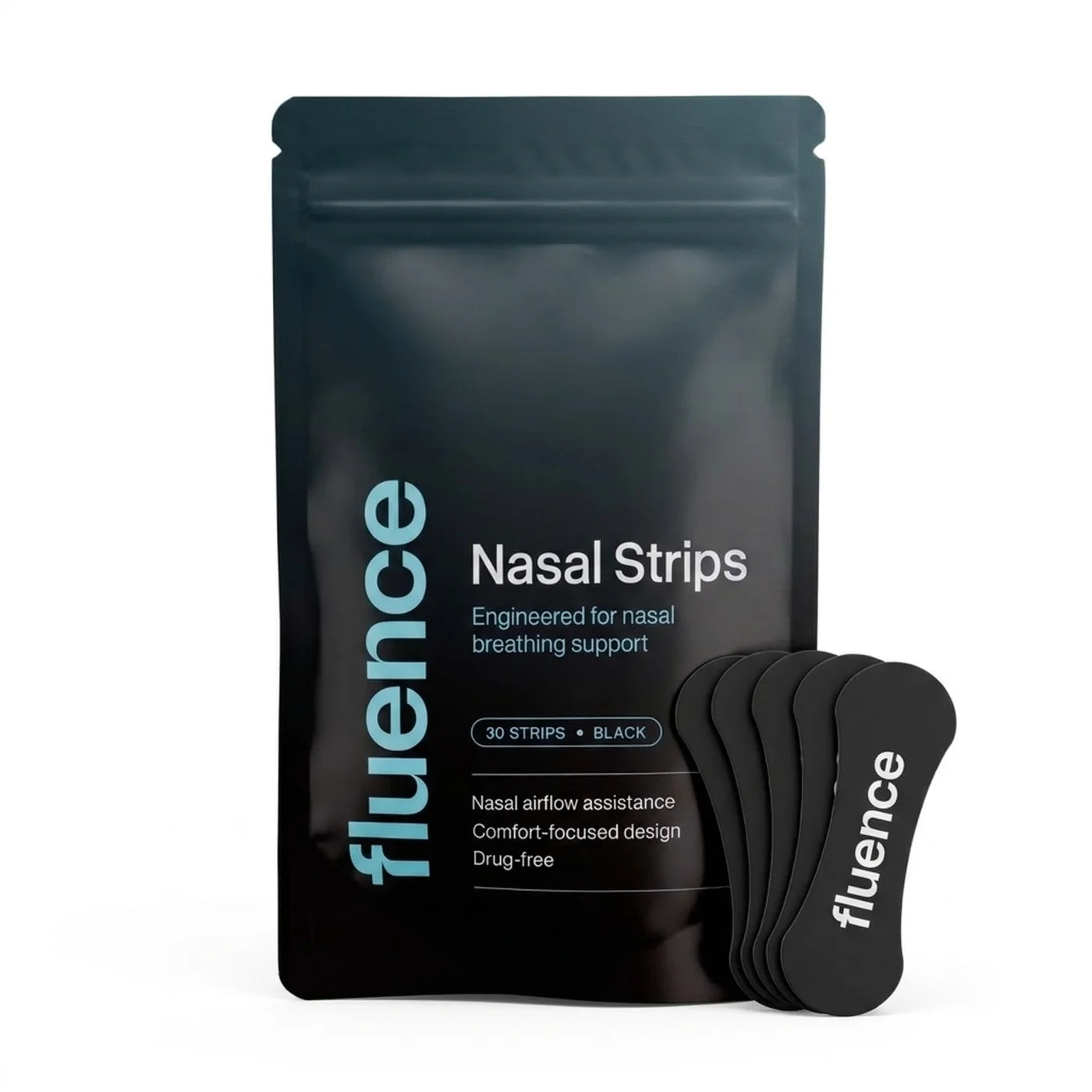
Fluence Nasal Strips are made with hypoallergenic materials and designed for external use only, making them suitable for regular use as part of a sleep routine.
For people who prefer simple, drug-free solutions, that matters.
Who Might Benefit From Nasal Strips for Sleep?
Nasal strips may be useful for:
- People who prefer nasal breathing at night
- Athletes focused on recovery
- Individuals who wake with dry mouth
- Those who experience temporary nasal restriction
- Anyone looking for a non-medicated breathing support option
Because they’re single-use and easy to apply, they’re simple to trial without committing to complicated systems.
How to Use Nasal Strips Before Bed
- Clean and dry the nose thoroughly.
- Apply the strip across the bridge of the nose.
- Press firmly for 5 seconds to secure adhesion.
The lift should feel noticeable immediately.
Getting a strip to stay put overnight comes down to that application step more than anything else. If yours has ever lifted at an edge before morning, our guide on why nasal strips fall off walks through the usual causes and the fix.
Each pack contains 30 single-use strips, making it easy to incorporate into a nightly routine.
Are Nasal Strips Safe for Daily Use?
Fluence Nasal Strips are:
- Drug-free
- Non-invasive
- Designed for external use only
- Made with hypoallergenic materials
Because they do not rely on active ingredients, many people feel comfortable using them regularly.
If you have sensitive skin or a diagnosed sleep condition, consult a health professional before use.
The Bottom Line
Better breathing at night starts with airflow.
If you’re looking for a simple, external way to support nasal breathing during sleep, nasal strips are one of the most straightforward tools available.
No sprays.
No stimulants.
No complicated routines.
Just mechanical support to help you breathe more comfortably while you rest.
If you want to try them for sleep, Fluence Nasal Strips for sleep are Australian owned, drug-free and sold in packs of 30. Every order is backed by a 30-day money-back guarantee, so you can trial them over a few nights and see how your mornings feel.
Frequently asked questions
Do nasal strips help you sleep better?
They hold the nasal passages open so nasal breathing stays easier through the night - most useful when a blocked-feeling nose pushes you into mouth breathing. They are not a treatment for sleep disorders.
Can you wear a nasal strip all night?
Yes, they are designed for overnight wear. Fluence strips use a medical-grade adhesive designed for up to 12 hours of wear, applied before bed on clean, dry skin. Getting the most out of that comes down to application: a firm 5-second press so the adhesive sets before you lie down. If a strip lifts early, our guide on why nasal strips fall off covers the usual causes.
Do nasal strips help a blocked nose at night?
The mechanical lift can ease the feeling of obstruction, though it depends on what is causing the congestion. See a doctor about persistent blockage.
Do nasal strips help with sleep apnoea?
No. Nasal strips are a drug-free, external airflow support and they do not treat sleep apnoea or any other medical sleep condition. If you snore loudly most nights, wake gasping, or someone has noticed pauses in your breathing during sleep, see your doctor before spending money on any product.
Are nasal strips or mouth tape better for sleep?
They do different jobs. A nasal strip lifts the outside of the nose to support nasal airflow, while mouth tape aims to keep the lips together so breathing stays nasal. Some people use one, some use both. If a blocked-feeling nose is what pushes you to your mouth at night, opening the nasal airway is the more direct place to start. Our nasal strips vs mouth tape guide compares them in full.
Keep reading

Co-founder of Fluence. Writes about nasal breathing, hydration and the training that shaped both products.
This article is general information only and is not medical advice. Nasal strips are drug-free, external-use products and do not treat medical conditions, including sleep apnoea. If you have ongoing snoring, sleep or breathing concerns, speak with your doctor.
Published 08/07/2026 · Updated 26/09/2026
← Back to Learn