Best hydrogen water in Australia: bottles, tablets and sachets compared
 Lachlan Maskell
4 min read
Lachlan Maskell
4 min read

On this page
If you have decided to try hydrogen water, you have three real options: an electrolysis bottle, dissolvable tablets, or a sachet you stir in. Each one works. Each one has a catch. Full disclosure up front: Fluence makes a sachet, so we are a player in this comparison, not a neutral referee. Most comparisons online are written by whoever sells one of the three, so here is the version with the trade-offs left in, including where our own format loses.
The three formats, honestly
Hydrogen water bottles are rechargeable devices that generate hydrogen in plain water by electrolysis. Quality units use SPE/PEM membranes; prices in Australia run from roughly $90 for basic bottles to well over $1,000 for countertop machines. The catch is threefold: the upfront cost, the charging and cleaning routine, and a market genuinely flooded with cheap units making physically impossible performance claims. The category has burnt a lot of buyers, and one of its best-known device brands went through bankruptcy in 2025, so if you go this way, buy on verified membrane technology and warranty, not marketing numbers. Once you own a good one, your ongoing cost per glass is close to zero. That is the format's honest advantage.
Hydrogen tablets dissolve in water and release hydrogen as they react. They are portable and need no device, and the leading tablets are popular with the research-following crowd. The catches: a dissolve wait of a couple of minutes before you drink, a drink-it-quickly window, a fizzy mineral taste some people never get used to, and a per-serve cost that typically lands between $1 and $2. Tablets are also a one-trick format: almost none of them carry meaningful electrolytes, so they are a hydrogen supplement, not a hydration drink.
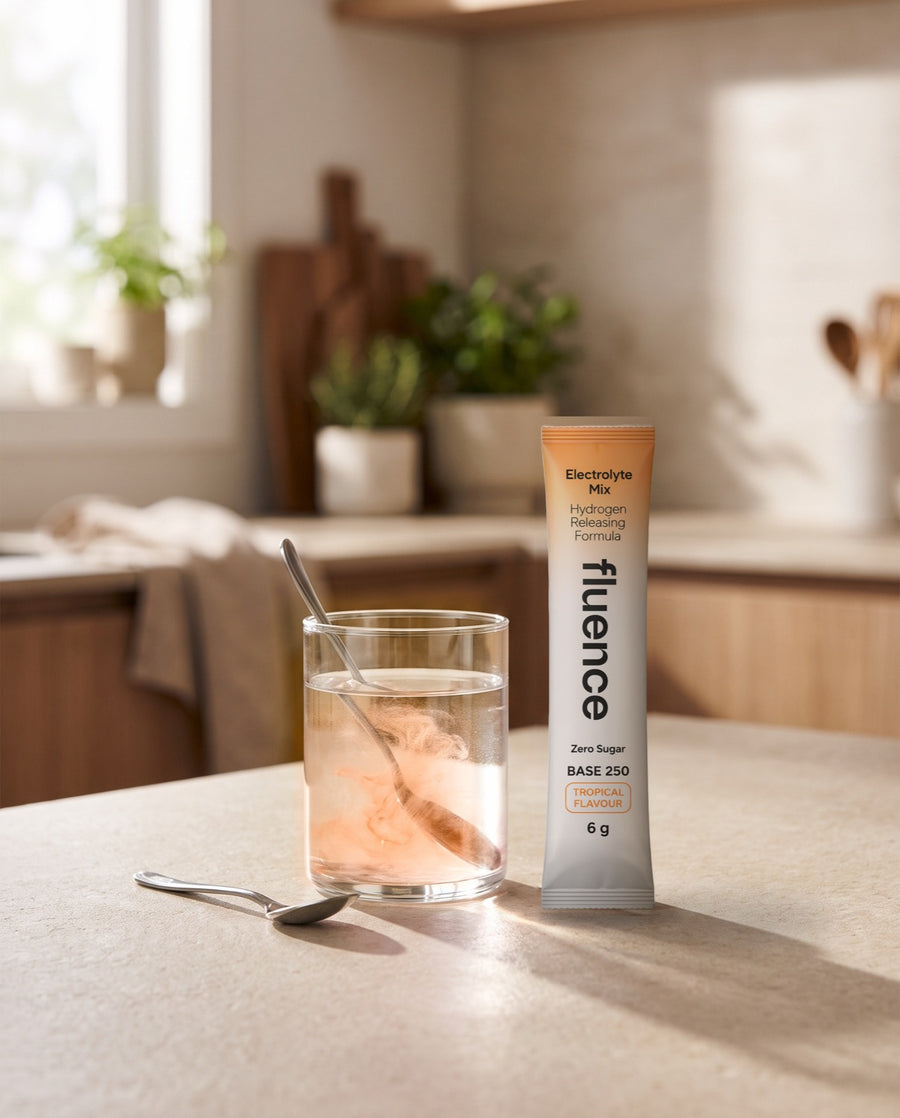
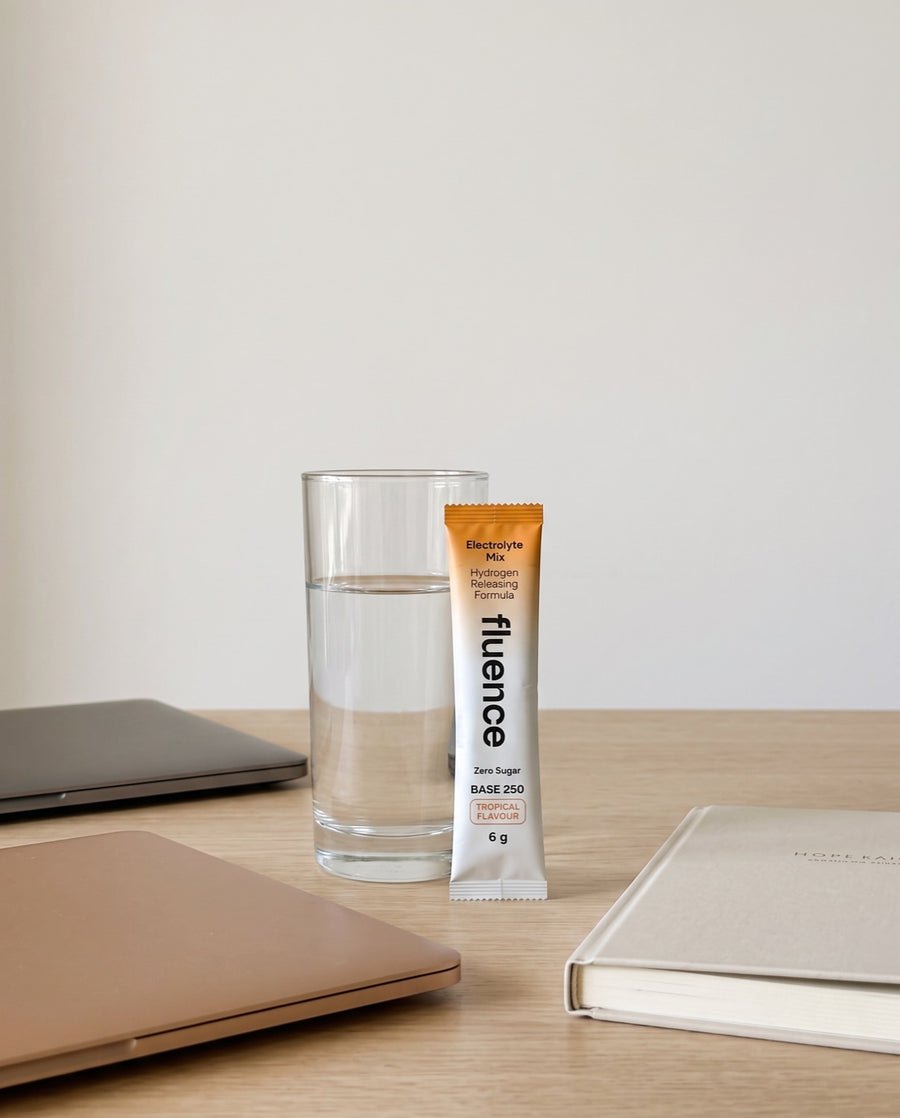
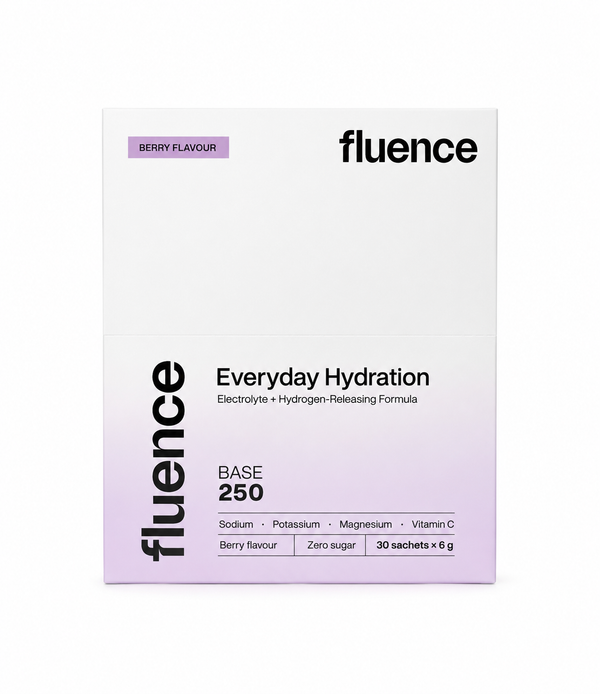
Hydrogen sachets are powders you stir into water. The reaction starts as you stir, there is no dissolve wait, and no device to buy, charge or clean. The catch: fewer options exist, as it is the smallest format category, and like tablets, sachets are consumables, so you pay per serve forever rather than once. Our own Base 250 sits here, and we built it to fix the tablet format's other gap: it is a full electrolyte drink (sodium, potassium, magnesium) that also releases molecular hydrogen when stirred, rather than hydrogen alone. Zero sugar, no carbonation, drinks like water.
The comparison
| Bottle | Tablets | Sachets | |
|---|---|---|---|
| Upfront cost | $90-1,000+ | none | none |
| Ongoing cost | near zero | ~$1-2/serve | ~$2-2.50/serve |
| Wait before drinking | minutes per cycle | ~2 min dissolve | stir and drink |
| Portability | carry the device | excellent | excellent |
| Electrolytes included | no | rarely, trace amounts | varies (Base 250: yes, 560mg) |
| Maintenance | charging, cleaning | none | none |
| Buying risk | cheap-unit minefield | taste, dissolve wait | fewest options |
Which one suits you
Choose a bottle if you drink hydrogen water many times a day, you are happy to research membrane quality properly, and the upfront spend beats a consumable habit on your maths. Choose tablets if you want hydrogen alone, portability matters, and the dissolve ritual does not bother you. Choose a sachet if you want the no-device, no-wait version, or if you were going to drink an electrolyte mix anyway, in which case a hydrogen-releasing electrolyte does both jobs in one glass. If the no-hardware route is what you are after, we go deeper on it in hydrogen water without the hardware.
One thing no format changes: the underlying science. Research on molecular hydrogen is genuinely interesting and genuinely still developing, with thousands of published papers, encouraging small human studies, and no guaranteed outcomes. We keep a plain-language summary of what the research does and does not show in our hydrogen water guide and in is hydrogen water legit, and we would rather you read it before buying anything, including from us.
Frequently asked questions
What is the cheapest way to drink hydrogen water?
Over years of heavy use, a quality bottle wins on cost per glass. For occasional or single-daily use, tablets and sachets cost less to start and carry no device risk.
Do hydrogen tablets have electrolytes?
Generally no. Most carry only trace minerals from the reaction ingredients. If you want hydration and hydrogen together, that is what hydrogen-releasing electrolyte sachets are for.
Are cheap hydrogen water bottles worth it?
Usually not. Very cheap units often lack proper SPE/PEM membranes, and some produce little dissolved hydrogen at all. If a device's claims sound physically impossible, they probably are.
Is there a hydrogen sachet made in the format of an electrolyte drink?
Yes. Fluence Base 250 is an Australian-owned electrolyte mix (250mg sodium, 250mg potassium, 60mg magnesium, zero sugar) that releases molecular hydrogen when stirred into water.
Does hydrogen water actually do anything?
The research is promising but still developing, with encouraging small studies around exercise recovery and oxidative stress markers, and no proven disease outcomes. Read the evidence summary in our hydrogen water explainer and decide for yourself.
Keep reading
Competitor category pricing is indicative and changes, so check current listings. This article is general information only.

Co-founder of Fluence. Writes about nasal breathing, hydration and the training that shaped both products.
This article is general information only and is not medical or dietary advice. If you have ongoing health or hydration concerns, are pregnant, or take prescribed medication, speak with your doctor, pharmacist or an accredited dietitian.
Base 250 is a formulated supplementary sports food. It is not suitable for children under 15 years of age or pregnant women, and should only be used under medical or dietetic supervision by those groups. It is not a sole source of nutrition and should be consumed in conjunction with a nutritious diet and appropriate physical training or exercise program.
Published 08/07/2026 · Updated 23/07/2026
← Back to Learn