Hydrogen water benefits: what the research actually shows
 Lachlan Maskell
3 min read
Lachlan Maskell
3 min read

On this page
Search for hydrogen water and you'll find claims about everything from energy to longevity. Here's the honest version: molecular hydrogen is a genuine, active area of research with some promising early findings - and a lot of marketing that runs well ahead of the evidence. This article covers what the research actually suggests, and what it doesn't.
The three most-studied areas
Antioxidant capacity. The core hypothesis behind hydrogen water: molecular hydrogen (H2) is a very small molecule, and research suggests it may support the body's antioxidant capacity. This is the area with the most published work.
Perceived exertion during exercise. Several small human studies report that participants drinking hydrogen water rated the same workout as feeling easier - lower perceived exertion - compared with plain water. Results are not universal, and study sizes are small.
Recovery. Some studies report improvements in recovery-related markers after exercise. Again: promising, small-scale, and still developing rather than settled.
Across all three, the fair summary is the one we use everywhere at Fluence: research suggests molecular hydrogen may support antioxidant capacity, lower perceived exertion and aid recovery - promising but still-developing science.
What the research does not show
Hydrogen water is not a treatment for any medical condition, and no health authority recognises it as one. Claims about curing disease, reversing ageing or replacing medical care are marketing, not science. If a seller states outcomes as certainties, that tells you more about the seller than the product.
Why researchers keep studying it
There are more than 3,000 published papers on molecular hydrogen - a real body of research for a simple molecule. The interest comes from its size: H2 is the smallest molecule there is, which shapes how it moves and dissolves. Whether that translates into meaningful everyday benefits for healthy people is exactly what the ongoing research is trying to pin down.
How to read hydrogen water claims
- Human or animal study? Many bold claims trace back to animal or cell studies.
- How many participants? Much of the exercise research involves small groups.
- Who is telling you? A seller quoting one favourable study is not a literature review.
- Hedged or absolute? Honest reporting says "may support" and "research suggests" - because that is where the science genuinely is.
If you want to try it
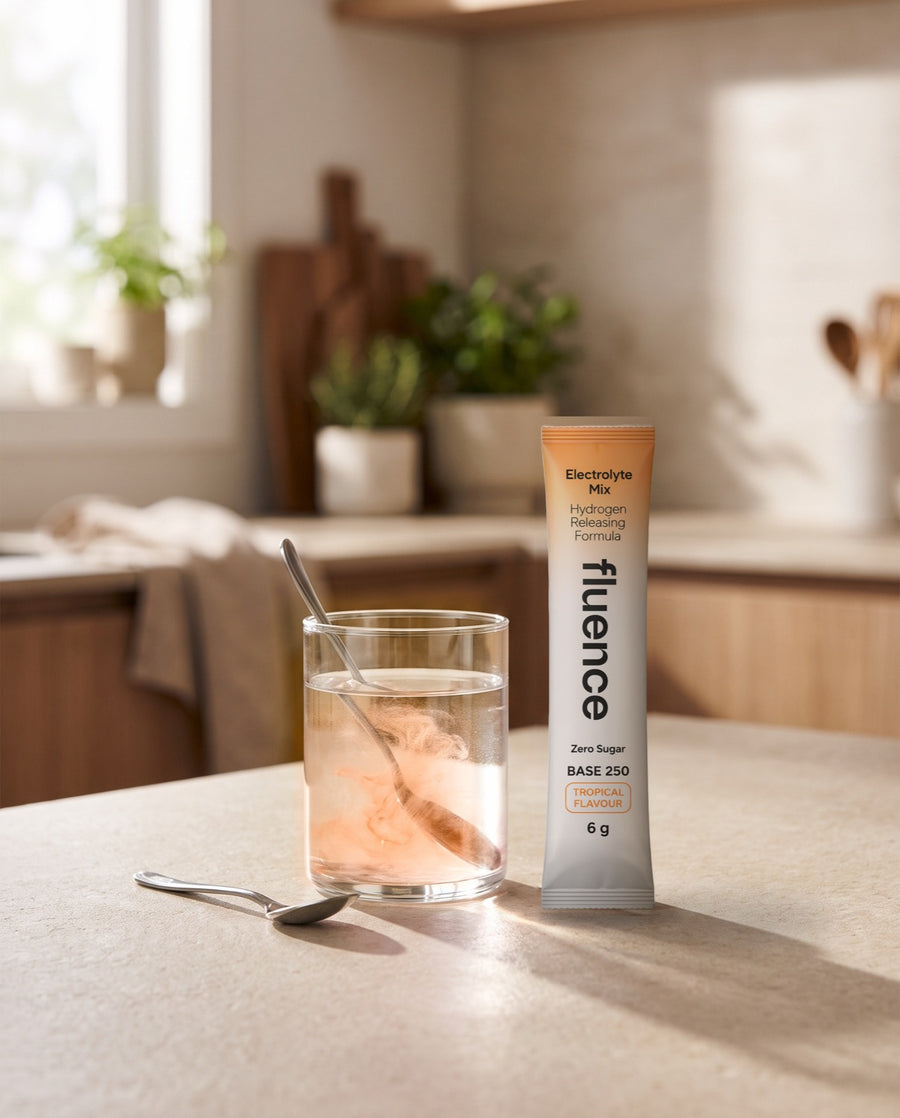
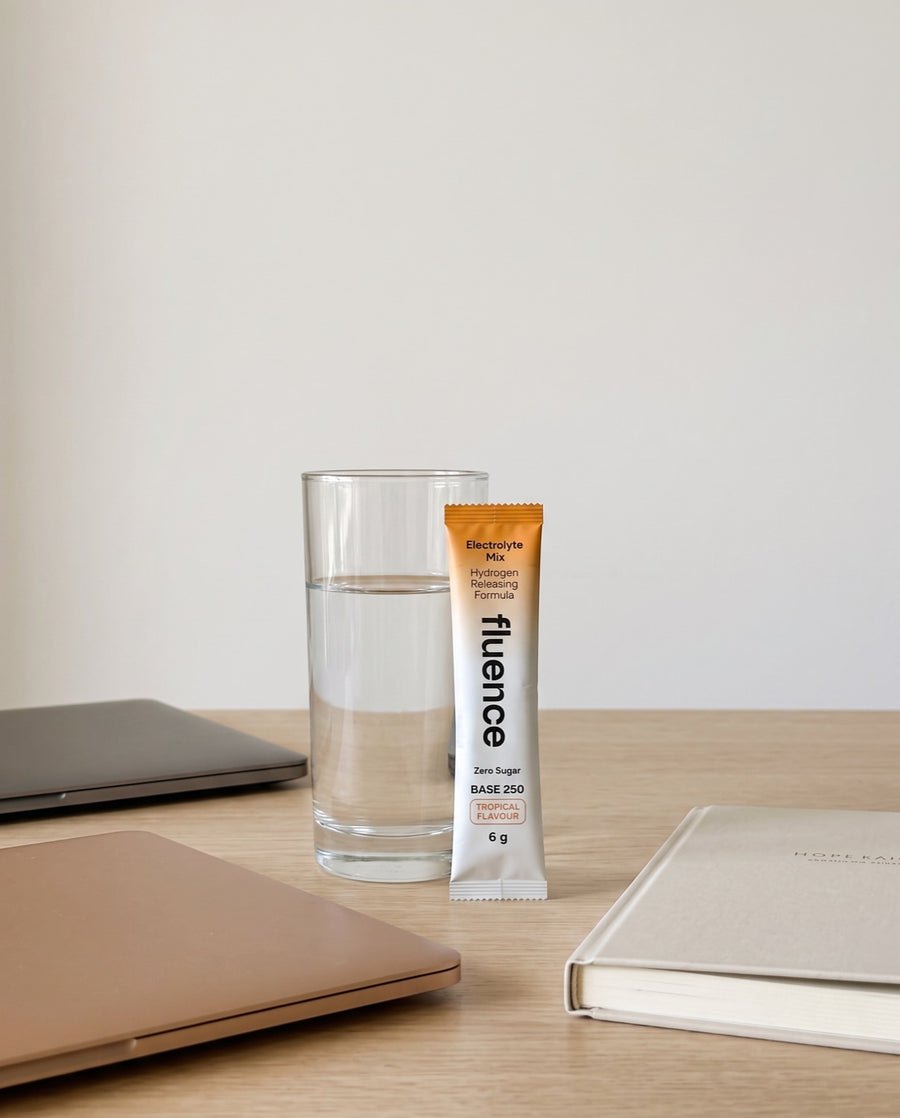
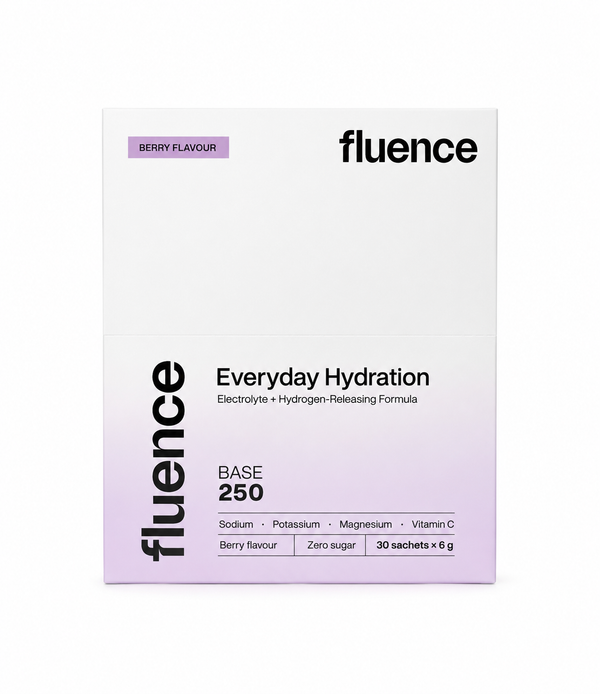
You don't need expensive hardware to test hydrogen water for yourself. Hydrogen-releasing sachets are the lowest-cost entry: Fluence Base 250 releases molecular hydrogen as it dissolves, with a balanced 250mg-sodium electrolyte formula, zero sugar, made in Australia. Try it for a few weeks and judge on your own experience rather than anyone's promises. Explore Base 250.
Frequently asked questions
What are the proven benefits of hydrogen water?
None are 'proven' in the medical sense. Research suggests molecular hydrogen may support antioxidant capacity, lower perceived exertion and aid recovery - promising but still-developing science.
Does hydrogen water help with exercise?
Some small human studies report lower perceived exertion and better recovery markers. Results are mixed and individual, so test it in your own training.
Is hydrogen water just a placebo?
The research field is real - more than 3,000 published papers on molecular hydrogen - but many marketed claims outrun the evidence. Read claims critically and judge on your own experience.
Keep reading

Co-founder of Fluence. Writes about nasal breathing, hydration and the training that shaped both products.
This article is general information only and is not medical or dietary advice. If you have ongoing health or hydration concerns, are pregnant, or take prescribed medication, speak with your doctor, pharmacist or an accredited dietitian.
Base 250 is a formulated supplementary sports food. It is not suitable for children under 15 years of age or pregnant women, and should only be used under medical or dietetic supervision by those groups. It is not a sole source of nutrition and should be consumed in conjunction with a nutritious diet and appropriate physical training or exercise program.
Published 08/07/2026 · Updated 21/07/2026
← Back to Learn