What does hydrogen water cost? Bottles vs machines vs sachets
 Lachlan Maskell
4 min read
Lachlan Maskell
4 min read

On this page
Hydrogen water costs vary enormously. Countertop machines can run over $1,000, portable electrolysis bottles roughly $90 to $250, and reactive tablets or drink-mix sachets a few dollars per serve. The cheapest way to try it is a sachet or tablet; the most expensive is a machine. Here's how the real per-serve maths compares across each option.
How much do hydrogen water machines and bottles cost?
Portable electrolysis bottles typically land somewhere around $90 to $250. Countertop machines that treat a household's water can run from several hundred dollars to well over $1,000. That's the upfront cost - on top of it, factor in electricity, filter or part replacements, and the time spent cleaning and maintaining them. If you want the full format-by-format breakdown, we compare bottles, tablets and sachets side by side in our hydrogen water formats guide.
How much do hydrogen tablets cost?
Reactive tablets are usually sold in packs and work out to a few dollars per serve - commonly $1 to $2 a tablet once shipping is counted, so roughly $30 to $65 a month at one a day. There's no device cost, but it's a single-purpose spend - hydrogen only, unless the product also adds other ingredients. We go deeper on the format, including where tablets genuinely win, in our hydrogen tablets buyer’s guide.
How much do hydrogen drink-mix sachets cost?
Drink-mix sachets are also a few dollars per serve, but you get more in the glass: hydrogen plus electrolytes and flavour in one. That makes the per-serve cost easier to justify, because the sachet replaces both a hydrogen product and an electrolyte drink.
What's the cheapest way to try hydrogen water?
A sachet or tablet, comfortably. You avoid the biggest cost - the device - and you're only out a few dollars to see whether you like it. If hydrogen water turns out not to be for you, you haven't sunk hundreds into hardware. That low-risk entry is a big part of why sachets have taken off. If you’re weighing up whether any of it is worth it in the first place, we wrote an honest look at whether hydrogen water is legit.
The real cost comparison
When you compare like for like, a machine is a large fixed investment plus ongoing upkeep, while a sachet is a small per-serve cost with none. For most people trying hydrogen water, or drinking it occasionally, the sachet maths simply wins. Heavy daily household users are the main case where a machine's per-serve cost can come down over time - at the cost of the upfront outlay and maintenance.
Where Fluence lands
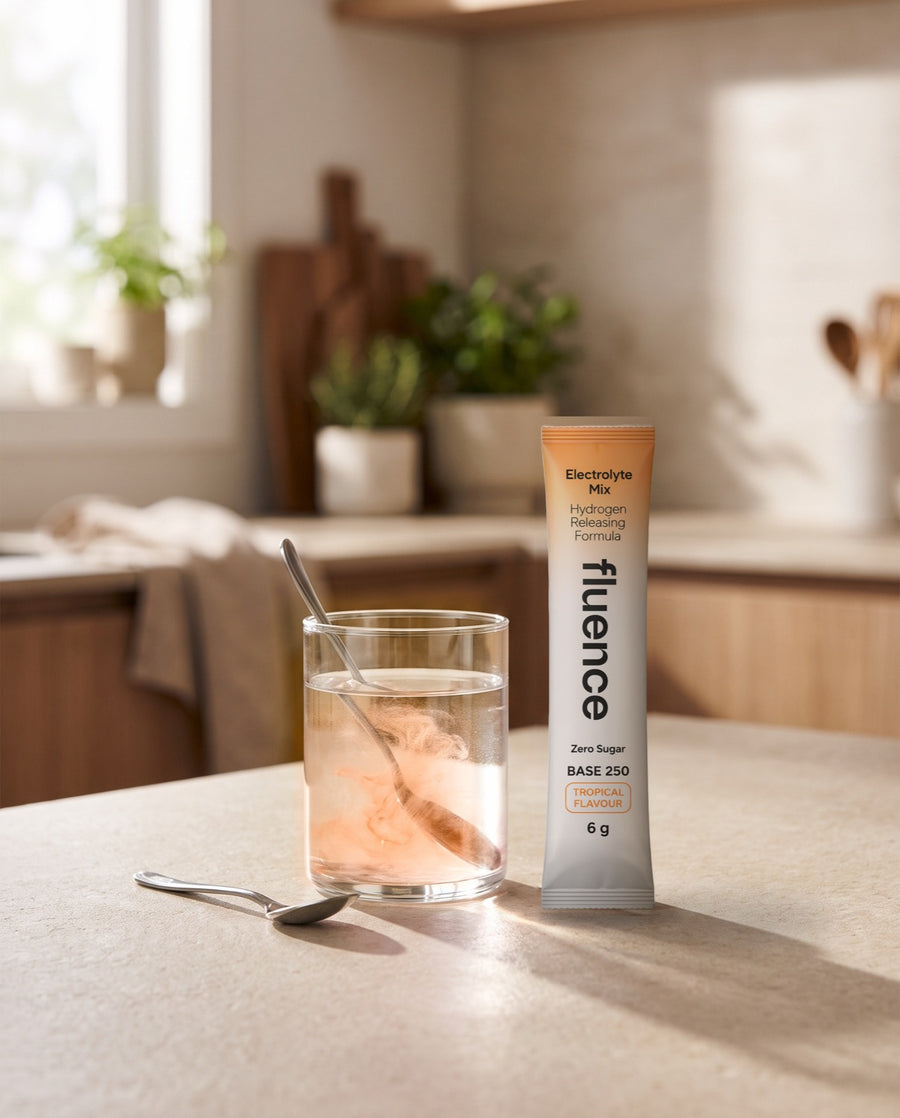
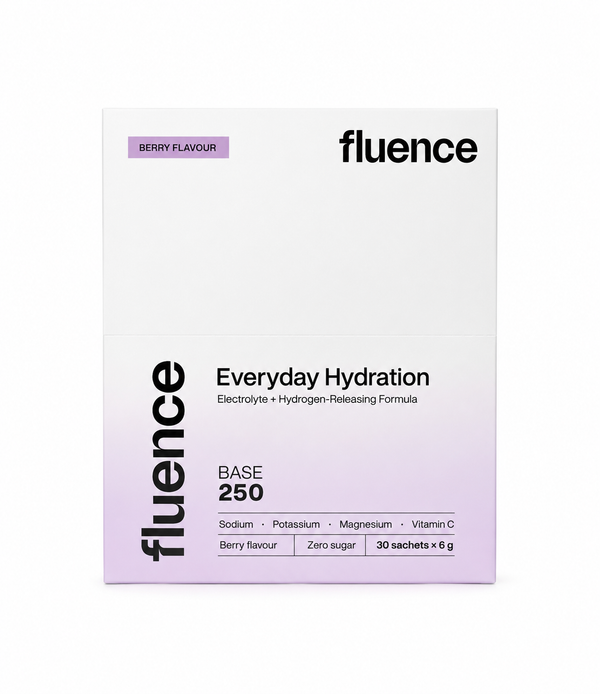
Base 250 is a drink-mix sachet, so the maths is the sachet maths: no device to buy, charge or clean. In real numbers, a 30-sachet box works out to about $2.33 a serve, or $1.93 a serve on a monthly subscription, and the $39.99 Trio (fifteen serves across Berry, Lemon and Tropical) is the low-commitment way to find your flavour before committing to a box. A single sachet is $3.49 to try one when it’s in stock. Every serve includes balanced electrolytes and flavour and releases molecular hydrogen as it dissolves, so it’s doing your hydration a job at the same time, not hydrogen alone.
If you’re deciding, there’s a 30-day money-back guarantee: if it is not for you, tell us and we will refund it. Australian owned, shipped from Australia. See current Base 250 pricing.
Frequently asked questions
Why are hydrogen water machines so expensive?
They contain electrolysis hardware; the cost is the device, not the water.
How much does a hydrogen water bottle cost in Australia?
Portable electrolysis bottles typically run about $90 to $250, and countertop machines that treat a household’s water can run from several hundred dollars to well over $1,000. On top of the purchase price you’re also paying for electricity, replacement parts or filters, and the cleaning time. Category pricing is indicative and changes, so check current listings.
Do hydrogen water machines save money over time?
Only if you use them heavily. Once you own a good bottle or machine, the cost per glass is close to zero, so a heavy daily household user can bring the per-serve cost down over the years. For occasional or single-daily drinkers, a per-serve product like a tablet or sachet usually stays cheaper overall, because there’s no upfront device, no electricity and no maintenance to recoup.
Is hydrogen water worth the cost?
Trying it via a sachet costs little; a machine is a much bigger bet on something research is still exploring.
What's cheaper, tablets or sachets?
Similar per serve - but sachets typically include electrolytes and flavour, so you get more for it.
How much is Base 250 per serve?
About $2.33 a serve on a 30-sachet box, or $1.93 a serve on a monthly subscription. A single sachet is $3.49 to try one. See the product page for current pricing.

Co-founder of Fluence. Writes about nasal breathing, hydration and the training that shaped both products.
This article is general information only and is not medical or dietary advice. If you have ongoing health or hydration concerns, are pregnant, or take prescribed medication, speak with your doctor, pharmacist or an accredited dietitian.
Base 250 is a formulated supplementary sports food. It is not suitable for children under 15 years of age or pregnant women, and should only be used under medical or dietetic supervision by those groups. It is not a sole source of nutrition and should be consumed in conjunction with a nutritious diet and appropriate physical training or exercise program.
Published 08/07/2026 · Updated 22/08/2026
← Back to Learn