Hydrogen water for training: what athletes should know
 Lachlan Maskell
2 min read
Lachlan Maskell
2 min read

On this page
Hydrogen water has quietly picked up a following among runners, lifters and hybrid athletes. Here's the honest version of why - what the research suggests, where its limits are, and how to fit it into training without buying hardware.
Why athletes are interested
The exercise research on molecular hydrogen centres on two ideas. First, perceived exertion: several small human studies report that the same session feels slightly easier after drinking hydrogen water. Second, recovery: some studies report improvements in recovery-related markers after hard efforts. Research suggests molecular hydrogen may support antioxidant capacity, lower perceived exertion and aid recovery - promising but still-developing science, built on small studies.
What it won't do
No credible research shows hydrogen water making you measurably faster or stronger, and it is not a treatment for anything. If your basics - sleep, food, plain hydration, programming - aren't in place, hydrogen water is the wrong thing to reach for first. Think of it as a marginal extra layered on a solid routine, judged by how your training actually feels over weeks.
Fitting it into a training day
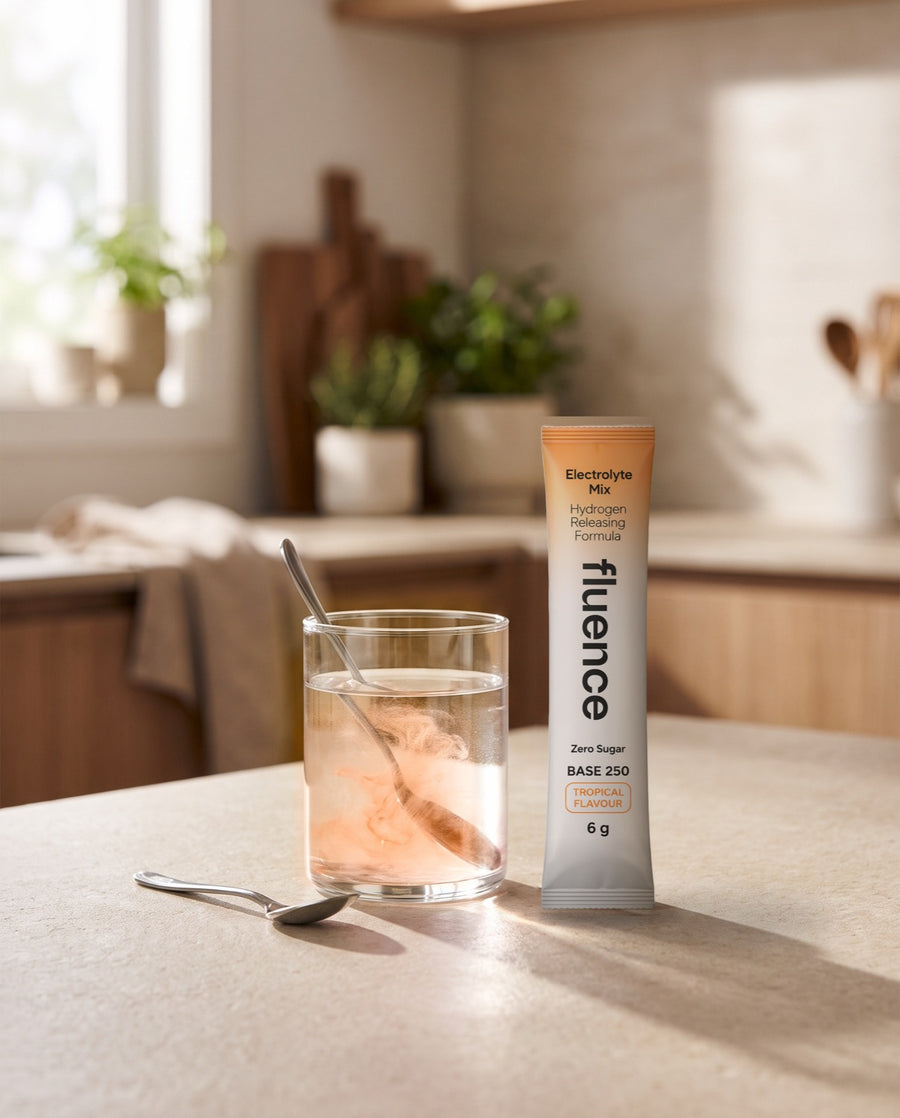
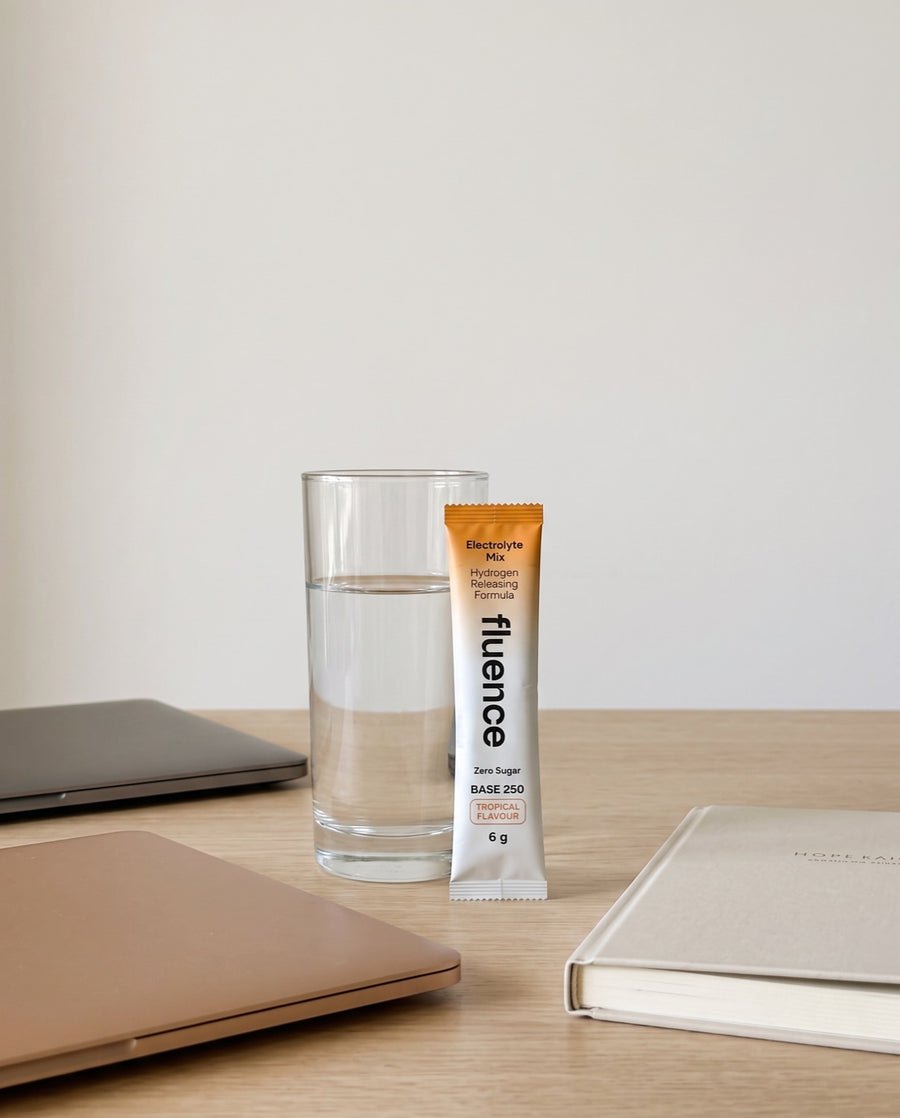
- Pre-session or during: a sachet stirred into your bottle covers hydration and electrolytes and releases molecular hydrogen as it dissolves - drink it fresh, since H2 escapes over time.
- Post-session: the same serve doubles as your rehydration step, replacing sodium and potassium lost in sweat.
- No hardware needed: electrolysis bottles work but need charging and cleaning. A sachet does the job from a gym bag. The sachet approach explained.
The electrolyte side matters more
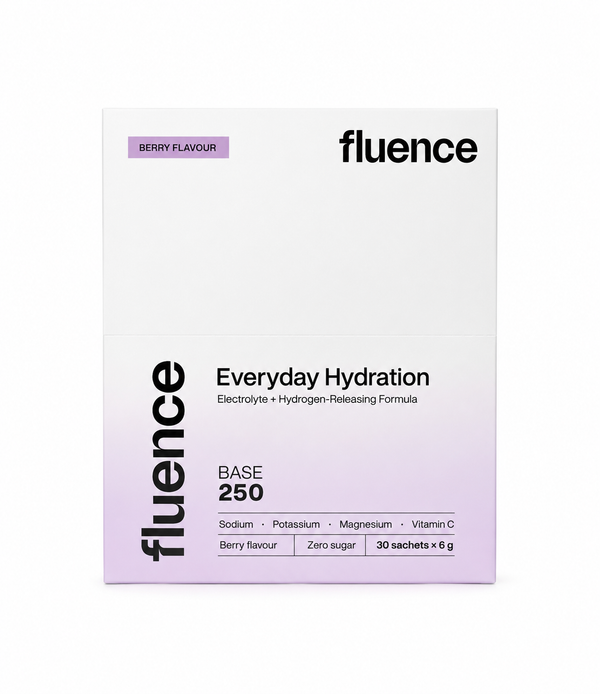
For most training days, the sodium and potassium in your drink do more measurable work than the hydrogen. Fluence Base 250 pairs the hydrogen-releasing formula with a moderate everyday electrolyte dose - 250mg sodium, 250mg potassium, 60mg magnesium, zero sugar - built for daily sessions rather than race-day salt loading. Explore Base 250.
Frequently asked questions
Should I drink hydrogen water before or after training?
Either works - fresh is what matters, since dissolved hydrogen escapes over time. Many people simply make it their session bottle.
Will hydrogen water improve my times?
The research doesn't show consistent performance gains. Reported benefits centre on perceived exertion and recovery, and they're individual - test it across a few weeks of training.
Do I need a hydrogen bottle for training?
No. Hydrogen-releasing sachets dissolve in any bottle with no charging or cleaning, which suits training days better for most people.
Keep reading

Co-founder of Fluence. Writes about nasal breathing, hydration and the training that shaped both products.
This article is general information only and is not medical or dietary advice. If you have ongoing health or hydration concerns, are pregnant, or take prescribed medication, speak with your doctor, pharmacist or an accredited dietitian.
Base 250 is a formulated supplementary sports food. It is not suitable for children under 15 years of age or pregnant women, and should only be used under medical or dietetic supervision by those groups. It is not a sole source of nutrition and should be consumed in conjunction with a nutritious diet and appropriate physical training or exercise program.
Published 09/07/2026 · Updated 21/07/2026
← Back to Learn